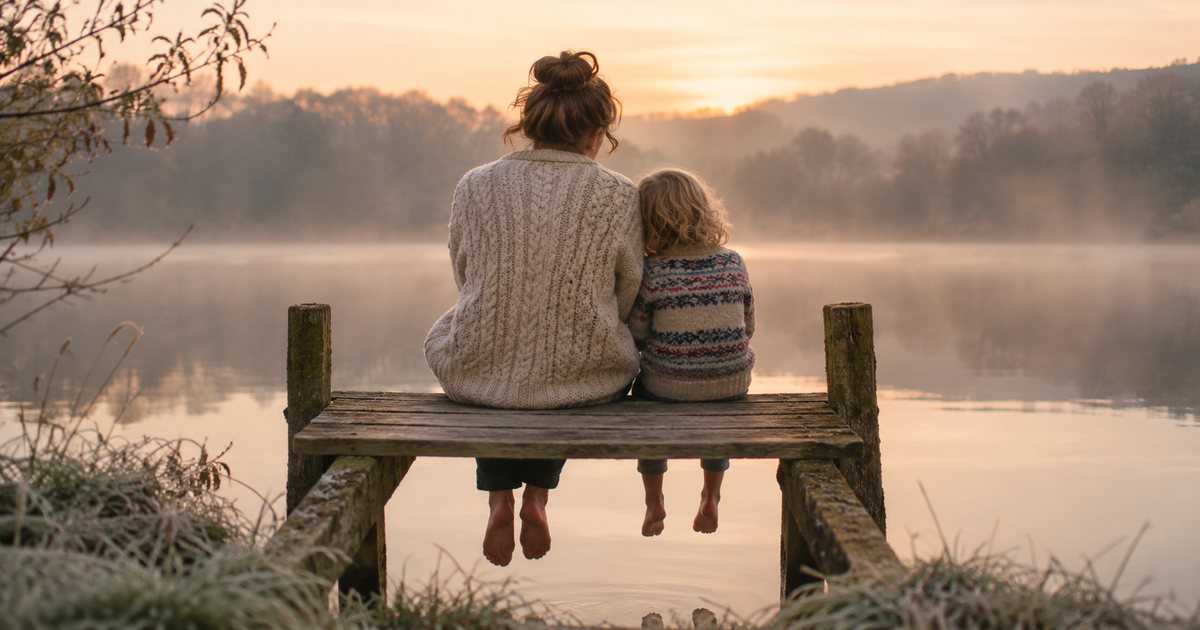
It happens when you least expect it. You're sitting on the back step with a cup of tea going cold, and your child wanders over and leans against you. They don't say anything. They just watch a bee working its way along the lavender, and you watch it too, and for a few minutes the whole day goes quiet.
That's calm. Not the forced kind, where a grown-up says "calm down" through gritted teeth, but the soft, settled feeling of a body that has stopped rushing. It's easy to miss because it's so quiet. But it's worth catching, because a child who knows what calm feels like can start to find their way back to it.
How calm settles in
At 3 to 5, calm usually looks like absorption. A child sorting pebbles, stirring a mud pie, or lying on their tummy watching ants. Their breathing slows, their shoulders drop, and they hum to themselves without knowing it. It rarely lasts long, and that's fine.
Between 6 and 10, calm can stretch out. It might be an hour lost in drawing, a slow walk with the dog, or the dreamy quiet of a car journey home. Older children can begin to notice it for themselves and even ask for it: "Can we go to the river?"
Calm can also hide behind things that look like something else. A child who goes very quiet after school may not be sad. They may simply be refilling. And a child who seems "bored" on a slow afternoon is sometimes right on the edge of finding their calm, if nobody rescues them too quickly.
Why the quiet feeling comes and goes
A child's body is always reading the world around it. Noise, hurry, bright screens and lots of people all turn the dial up. Slow, steady, natural things, like running water, wind in trees and a familiar grown-up nearby, turn it down. Calm isn't something children switch on by trying. It arrives when the world around them slows enough to let it.
That's why calm comes and goes so much. It isn't a personality trait some children have and others lack. It's a state every child can visit, more easily on some days than others.
When the quiet feeling arrives
When you notice calm, try not to break it. It's tempting to ask a question or suggest a next thing. Instead, slow down to match them. Sit nearby, lower your voice, and let the moment be.
If you do speak, keep it small and warm. "This is nice, isn't it." Naming calm quietly helps a child recognise it later, and gives them a word for the place they'll want to find again on harder days.
Afterwards, you might notice it together: "You looked so peaceful by the pond." Children can't find their way back to a place they don't know they've been.
- Slow to matchLower your voice and your pace so you join their quiet rather than breaking it.
- Just sit nearbyResist the next question or plan, and let the peaceful moment stretch a little longer.
- Name it softlyA quiet "this feels peaceful" gives them a word for the place they can find again.
- Remember it laterAfterwards, mention how peaceful they looked so they know calm is somewhere they've been.
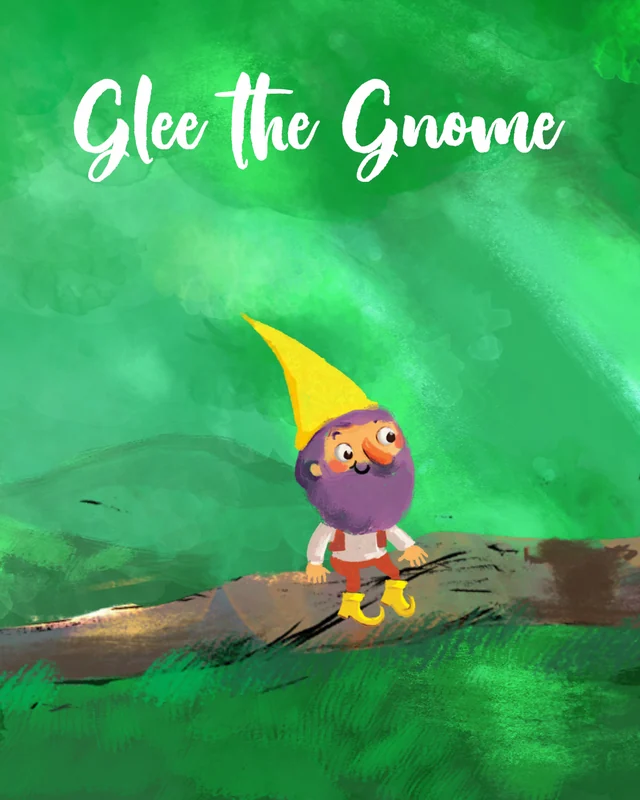
Glee the Gnome, the happy resterIn the stories, Glee the Gnome is delighted by small comforts like a root to sit on and birdsong, and he makes quietness look like a treat. Meet Glee the Gnome
Calm that grows outside
One of the gentlest habits is a sit spot. Choose a place outside that you pass often: a bench, a tree root, the end of the garden. Visit it regularly and just sit for a few minutes, listening and looking. Little ones might count the sounds on their fingers. Older children may like to notice what's changed since last time. Over the weeks, the spot itself starts to carry the feeling, and simply arriving there helps the body settle.
The other is breathing with something that moves. Watch clouds and breathe in as one drifts, out as it goes. Or blow slowly on a dandelion clock, a feather, the surface of a puddle. For days when calm is hard to find at all, our guide to sensory overwhelm in children has more on quiet places in a loud world, and the page on wonder shows how slowing down opens the door to it.
What you'll need
- A sit spot: a bench, root or garden corner
- Five slow minutes, a few times a week
- A dandelion clock or a feather to blow
- A clear sky for cloud watching
Our tips
- When you notice calm, slow down to match them rather than asking what's next.
- Name it softly: "this feels peaceful, doesn't it."
- Later, mention how peaceful they looked so they know where calm lives.
For the fridge: one small step a day
- MonChoose a sit spot together
- TueSit there and count the sounds you hear
- WedBreathe in and out with a drifting cloud
- ThuA slow, quiet walk home from school
- FriBlow gently on a feather or dandelion
- SatVisit your sit spot: what has changed?
- SunAsk: where's the calmest place you know?
Words to try
- "This feels peaceful, doesn't it."
- "Let's just sit here for a little while."
- "Can you hear how quiet it is?"
- "Your body looks so soft and still."
- Try asking (afterwards): "Where's the calmest place you know?"
A week to try
For the fridge: one small step a day
- MonChoose a sit spot and sit quietly together 10 mins
- TueBreathe slowly with a leaf 5 mins
- WedName a calm moment softly when you see one 0 extra mins
- ThuSlow walk among trees 20 mins
- FriOne quiet hour: screens and noisy toys off 1 hour
- SatBack to the sit spot: what has changed? 15 mins
- SunAsk: where's the calmest place you know? 10 mins
We will put each day on your family calendar, starting today, with the matching mission ready to open.
Questions parents ask
How can I help my child feel calm?
Calm is learned mostly by feeling it, not by being told about it. Regular unhurried time outside, a predictable rhythm to the day and a grown-up who slows down too all help. Notice calm moments when they happen and name them softly. Over time, children learn where calm lives and how to get back there.
Is it normal for my child to want quiet time after school?
Yes, very. School is full of noise, people and asking, and many children need time to refill before they can talk or play. A snack, a slow walk home or a quiet sit in the garden can be exactly right. If after-school time often tips into tears, the guide to after-school meltdowns may help.
Why does my child seem calmer outside?
Outside, the pace is slower and the sounds are softer. There's room to move, and living things like birds, trees and water hold attention gently rather than grabbing it. Many children's bodies seem to settle naturally in that kind of space, and grown-ups often notice the same thing in themselves.
Wundoria is a set of eight story worlds for children aged 3 to 10, where every story ends with missions to do outside together. Our guides are written to support everyday family life; they are not medical advice. If you are worried about your child, talk to your GP or health visitor.
Play world one free All of feelings