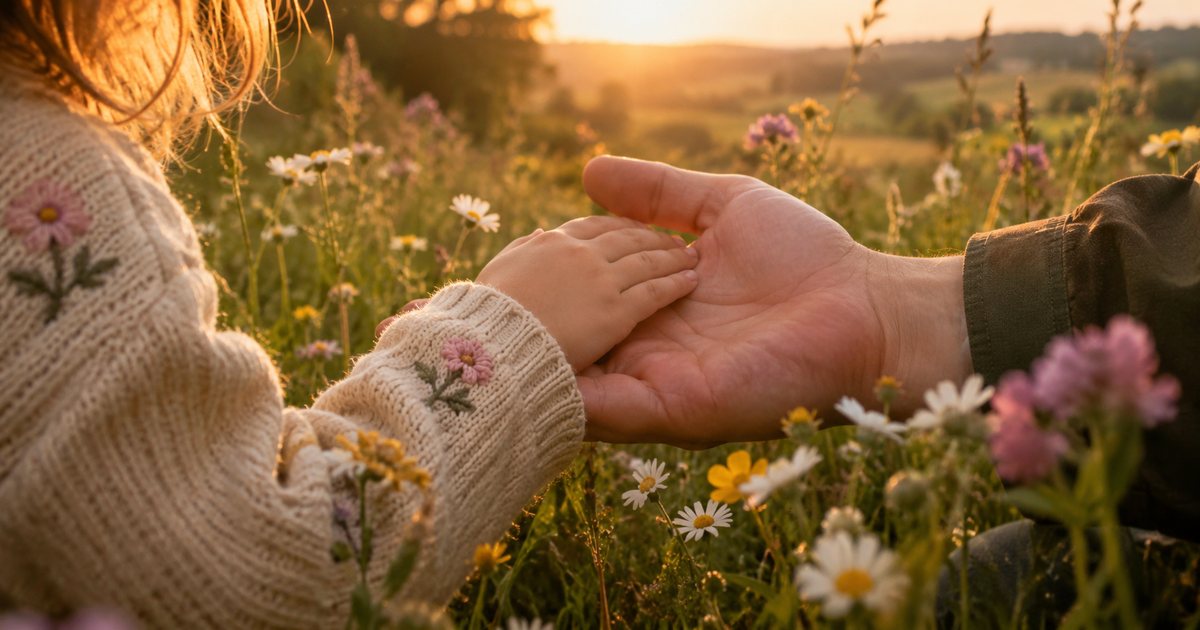
You find it in your coat pocket on the bus. A slightly squashed daisy, a smooth grey stone and a crumpled drawing of what might be you, with very long arms. Nobody mentioned it. It was just put there, at some point this morning, for you to find.
That is love, in the language young children speak best. Not always words, and rarely at a convenient time, but a steady stream of small offerings and leanings-in. It's the feeling underneath almost everything else a child feels, and noticing it, in both directions, helps it grow.
How love shows itself
At 3 to 5, love is physical and immediate. Sudden fierce hugs, sitting on your feet, insisting on holding hands, bringing you every interesting thing they find. Little ones also love with their whole body in a way that can be a bit much: the hug that's really a rugby tackle, the kiss that's mostly nose.
Between 6 and 10, love becomes more thoughtful. A child might make a card without being asked, save you the last biscuit, or worry about a grandparent who's poorly. They begin to love friends, pets and places, not only family. Some older children become shy about showing it, especially in front of others, while still wanting a goodnight cuddle at home.
Love can also hide inside harder feelings. Clinging at the school gate, jealousy of a sibling, or tears when you go out for the evening can all be love that doesn't yet know how to feel safe.
Why love can look so messy
Young children love before they have the skills to manage it. They feel it enormously, but they can't always wait, share or let go gracefully. So love comes out sideways sometimes, as grabbing, crying or refusing to say goodbye.
Underneath, love grows from being loved. A child who feels held, again and again, learns that love is safe and that it stays. That lesson is what lets them reach out to others.
When love spills over
When your child offers love, receive it fully, even when it's a soggy leaf or an awkward moment. Stop, look, and let them see that it landed. "You brought this for me. Thank you." Small offerings that are noticed tend to keep coming.
When love comes out in a clumsy way, like a squeeze that's too tight on the baby, gently show it another shape. "You love her so much. Let's give her a soft stroke instead." The feeling is good. It just needs a gentler doorway.
And show your love in return, in ways they can see and feel: a hand on the back, a note in a lunchbox, ten minutes of full attention.
- Receive it fullyStop and take the soggy leaf or squashed daisy, so they see their love has landed.
- Show a softer wayIf love comes out too hard, gently show a stroke or a soft hug instead of a squeeze.
- Love them backReturn it in a way they can feel: a hand on the back, a cuddle or full attention.
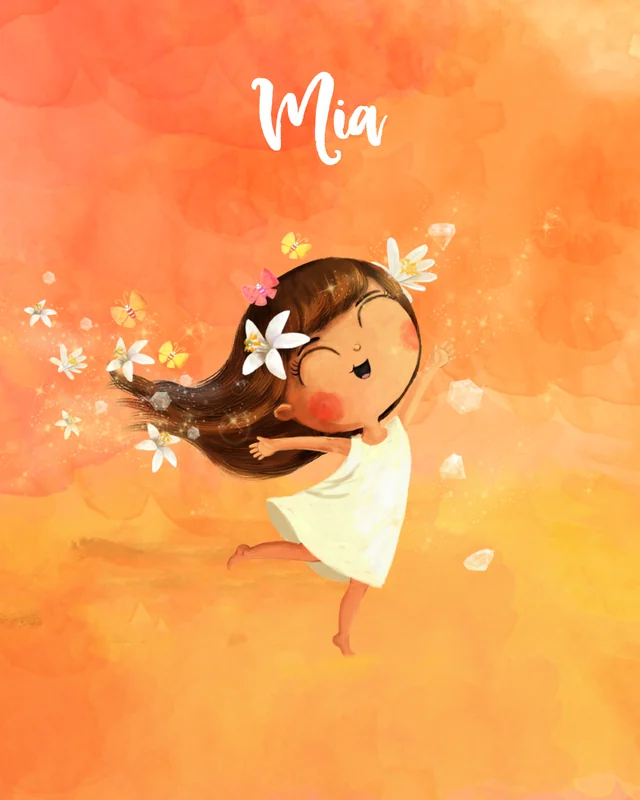
Mia, the belovedIn the stories, Mia's name means beloved, and in My Heart is a Flower she discovers her own love, travelling with her arms wide open. Meet Mia
Love that grows outside
Caring for something living is one of the gentlest ways love grows. A plant on the windowsill to water, a bird feeder to keep filled, a tree on the street to visit and say hello to. Children learn that love is something you do, regularly, not only something you feel. Little ones can help pour the seed; older children might take charge of it and notice who comes to visit.
Gathering small gifts on a walk is another. A pretty leaf for grandma, a pebble for a friend, a flower for the kitchen table. It turns any walk into a way of thinking about the people they love. Our guide on teaching empathy to kids has more on helping that care reach outwards.
What you'll need
- A pocket ready for small gifts
- A bird feeder and a bag of seed
- A plant on the windowsill to water
- Ten minutes of full attention
Our tips
- Stop and take the soggy leaf, so they see their love has landed.
- If a hug comes out too hard, show a softer shape: a gentle stroke.
- Love them back in ways they can feel: a hand on the back, a note in a lunchbox.
For the fridge: one small step a day
- MonFill the bird feeder together
- TueTuck a little note in their lunchbox
- WedGather a leaf for someone on a walk
- ThuWater the windowsill plant together
- FriTen minutes of full attention, no phone
- SatVisit a street tree and say hello
- SunAsk: who could we make happy today?
Words to try
- "I love you, all the way through."
- "You brought this for me. That made my day."
- "You love her so much, don't you."
- "Even when we're apart, the love stays."
- Try asking (afterwards): "Who could we make happy today?"
A week to try
For the fridge: one small step a day
- MonGather a small gift on a walk for someone you love 20 mins
- TueReceive every offering fully, even a soggy leaf 0 extra mins
- WedWrite a love note on a leaf 10 mins
- ThuFill the bird feeder together 10 mins
- FriFind out how each person likes to be loved 15 mins
- SatVisit or call an older relative 30 mins
- SunAsk: who could we make happy today? 10 mins
We will put each day on your family calendar, starting today, with the matching mission ready to open.
Questions parents ask
How can I show my child they are loved?
Mostly through small, regular things: full attention, gentle touch, time together outside, and noticing what they bring you. Children feel love in being listened to and in grown-ups who stay calm and come back after hard moments. Saying it out loud matters too, but it lands best alongside everyday care.
Is it normal for my 6-year-old to stop wanting hugs in public?
Yes. Around this age many children become aware of how they look to others and may wave away affection at the school gate. It doesn't mean they love you less. Most still want closeness at home, at bedtime or on a quiet walk. Follow their lead and keep the cuddles private for a while.
Why does my loving child sometimes hurt their sibling?
Young children often feel love and frustration at the same time, and their bodies haven't learned to separate the two. A squeeze that's too hard or a grab can be love that's too big to handle. Stay calm, keep everyone safe, and show a gentler way to touch. The guide to siblings who fight can help.
Wundoria is a set of eight story worlds for children aged 3 to 10, where every story ends with missions to do outside together. Our guides are written to support everyday family life; they are not medical advice. If you are worried about your child, talk to your GP or health visitor.
Play world one free All of feelings