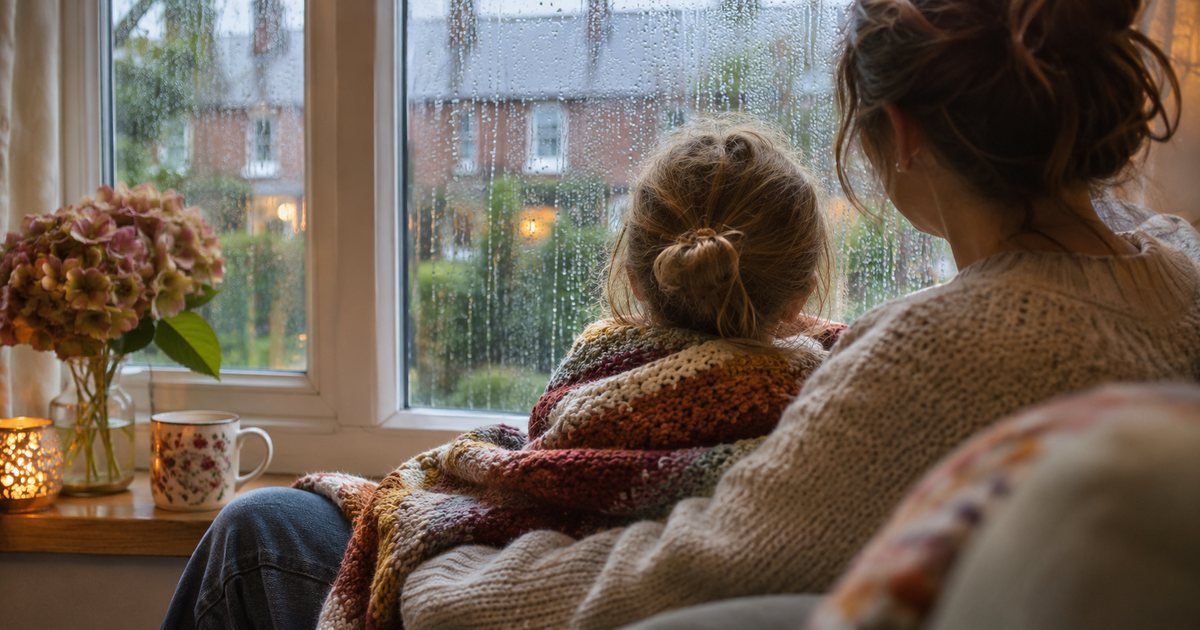
It's the end of a long day. Your child climbs onto the sofa, tucks their cold feet under your leg without asking, and leans in. Nobody says anything. The washing machine hums in the next room, the light is going outside, and for a few minutes everything is completely ordinary. Their breathing slows. They might even start chatting about something tiny that happened at lunch.
That softening is what feeling safe looks like. It isn't loud and it rarely announces itself. It's the quiet sense, deep in a child's body, that the people are here, the world is steady enough, and they can stop watching for trouble. It's worth noticing, because it's the ground everything else grows from.
What safe looks like in a child
In children of three to five, feeling safe often shows as wandering a little further away and then coming back to check in. They play absorbed and messy, sing to themselves, and fall asleep more easily. They'll let you see them cross, sad and silly, because they trust you'll still be there afterwards.
From six to ten, it shows as chattiness at odd moments, in the car, in the bath, on a walk. A child who feels safe will tell you things, try things, and get things wrong without falling apart. They can manage a wobble at school because home feels steady.
It can hide in surprising places. A child who saves their worst behaviour for you is often showing how safe they feel with you: they've held it together all day and finally can let go. That's tiring, and it's also a kind of compliment.
Where the feeling comes from
Safety grows from repetition. Not grand gestures, but small things happening the same way, often enough that a child stops wondering whether they will. The same bedtime song. The same goodbye at the school gate. A grown-up who comes back when they say they will.
It also grows from being met. When a child is upset and someone stays calm beside them, they learn that big feelings don't break anything. Over time, that becomes something they carry inside.
When they settle into you
When you see a child soften, you don't need to do much. Let the moment be. Stay where you are, keep your voice low, and resist the urge to fill the quiet with questions or plans.
If they start talking, listen more than you answer. Some of the most important things children say come out sideways in these settled moments, about a friend, a worry, a funny thing from Tuesday. Taking them seriously tells a child their inside world is welcome here.
And notice it out loud, gently, now and then. "It's nice just being here together, isn't it." Children learn to recognise safe by having it named.
- Stay putKeep still and close, and let the quiet moment be exactly what it is.
- Listen moreIf they start chatting, listen more than you answer, even to the tiny things.
- Name it softlyNow and then say, gently, how nice it is just being here together.
- Keep it familiarProtect the small, same-every-day rituals that make this moment possible.
Mother Earth, the living planetIn the stories, Mother Earth promises she is always here, forever and ever - a friend who never leaves. Meet Mother Earth
Steady places, steady rhythms
Children feel safer when the world around them has a familiar shape, and nature is very good at that. Choose one outdoor place you return to often, a bench, a particular tree, a corner of the park, and make it yours. Visit in all weathers. Notice what changes and what stays. A place that's always there, through the seasons, becomes a kind of anchor.
Small daily rituals do the same work. Filling a bird feeder each morning and watching from the window. A short walk after tea. Saying goodnight to the moon. None of it needs to be special, only reliable. If bedtimes feel like the wobbly part of the day, our guide to calm bedtime routines has more on building an evening rhythm.
Feeling safe often sits underneath calm, and it's the base camp that makes bravery possible.
What you'll need
- One outdoor place to return to often
- A bird feeder to fill each morning
- A short walk after tea
- Quiet sofa time at the end of the day
Our tips
- When they soften, stay put and let the quiet moment be exactly what it is.
- If they start chatting, listen more than you answer, even to the tiny things.
- Keep the small rituals the same. Reliable matters more than special.
For the fridge: one small step a day
- MonFill the bird feeder and watch together
- TueSay the same goodbye at the school gate
- WedVisit your tree or bench, in any weather
- ThuA short walk together after tea
- FriSay goodnight to the moon at the window
- SatSit close and listen to their tiny news
- SunAsk: where do you feel most cosy and safe?
Words to try
- "I'm here."
- "We're together. Nothing needs to happen right now."
- "You can tell me anything, even the muddled bits."
- "I always come back."
- Try asking (afterwards): "Where's the place you feel most cosy and safe?"
When to ask for more help
Talk to your GP or health visitor if your child seems on edge most of the time, startles easily, struggles to sleep, or seems changed after a frightening event. If you're worried someone may be hurting your child, the NSPCC helpline is free on 0808 800 5000. If a child is in immediate danger, call 999.
A week to try
For the fridge: one small step a day
- MonChoose one outdoor place you will keep coming back to 15 mins
- TueFill the bird feeder and watch from the window 10 mins
- WedThe same goodbye and hello, every time 0 extra mins
- ThuSlow walk after tea while the light goes 15 mins
- FriLie back and feel the sky holding you 10 mins
- SatVisit your place, whatever the weather 30 mins
- SunAsk: where do you feel most cosy and safe? 10 mins
We will put each day on your family calendar, starting today, with the matching mission ready to open.
Questions parents ask
How do I help my child feel safe and secure at home?
Keep the small things predictable: regular meals, a familiar bedtime routine, the same goodbye and hello. Stay calm and close when they're upset, and come back when you say you will. Children don't need a perfect home to feel safe, just one where the grown-ups are mostly steady and repair things after a hard moment.
Why is my child well behaved at school but difficult at home?
This is very common, and often a sign they feel safe with you. Holding it together all day in a busy classroom takes real effort, and home is where they finally let go. A quiet snack, some time outside and a little space after school, before any questions, can make the hand-over gentler for everyone.
Can nature help my child feel safe?
It can help a great deal. Natural places change slowly and come back reliably, season after season, which gives children a sense of steadiness. Returning to the same tree or bench, watching birds at a feeder, or a short evening walk can become rhythms that a child leans on, especially during times of change.
Wundoria is a set of eight story worlds for children aged 3 to 10, where every story ends with missions to do outside together. Our guides are written to support everyday family life; they are not medical advice. If you are worried about your child, talk to your GP or health visitor.
Play world one free All of feelings