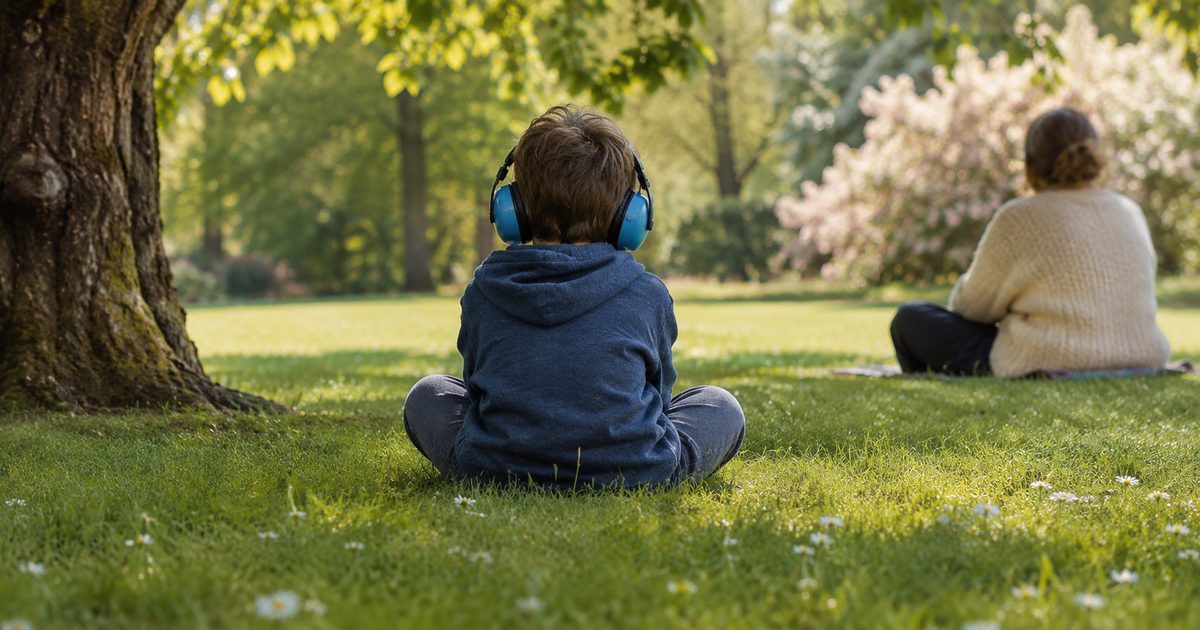
The birthday party is in full swing. The music is thumping, a balloon goes off like a gunshot, and twenty children are shrieking at once. Your child has both hands clamped over their ears. Their face starts to crumple, and then they bolt for the door. A few parents look over, puzzled. You don't need to be told what's happening. It's all just too much.
Some children take in the world more intensely than others. Sounds land louder, lights look brighter, labels scratch more, crowds press in harder. That sensitivity often comes with a lovely depth of noticing, the child who spots the tiny snail or hears the far-off bird. It just needs care, a bit of understanding and a few calming tools.
When the world gets too loud
Every child's nervous system handles sensory information in its own way. For some, ordinary noise, light, touch or busyness can pile up quickly until the brain feels flooded. When that happens, the body's alarm system kicks in, and you might see tears, a meltdown, running away or shutting down altogether.
Sensory sensitivities are common in all children, and especially common in autistic children and those with ADHD. Supporting a child's sensory needs helps whether or not there's any diagnosis. Parents are clearly looking for help with this: "How can I deal with an autistic meltdown?" was among the top ten most-read articles on Action for Children's parent service (Action for Children).
So the work is to notice what overwhelms your child, take some of the load off where you can, build in regular recovery time somewhere calm, and give them tools to soothe their own senses.
Knowing what your body needs
A child who learns what their body needs, and how to ask for it, carries that knowledge for life. They'll know to step out of a busy room, bring headphones to a concert, or take a quiet walk after a long day. Understanding your own senses is a real kind of self-care, and it can start very young.
Ways to turn the volume down
Nature tends to be gentle on the senses. The sounds are soft, the light is natural, and things move slowly. Regular time somewhere quiet, a wood, a riverbank, a still corner of the park, gives an overloaded nervous system a chance to reset. With little ones, it can be as simple as sitting under a tree and listening to the leaves. Older children, around nine or ten, often like having a favourite quiet spot they can return to.
A small sensory toolkit can make busy places more bearable. Put together a bag of calming things: ear defenders, a soft toy, sunglasses, something to squeeze, a smooth stone from a favourite walk. Take it with you, and let your child reach for it whenever they need to, no questions asked. Younger children might choose three things for it together with you. Older ones can pack it and look after it themselves.
After busy times, plan for recovery. Parties, school, shopping trips and travel all take something out of a sensitive child, so follow them with quiet: a walk, a bath, a cosy den, gentle music. Recovery is part of the plan, not a sign that something has gone wrong. For little ones, a den of cushions and a blanket works beautifully. Older children can choose their own way to unwind.
It also helps to give the feelings names. Help your child notice what their senses are telling them: "Is it too loud? Too bright? Too itchy?" The more they can put it into words, the more they can ask for what helps. A picture chart of the senses suits younger children. Nine- and ten-year-olds might enjoy giving a sensory "weather report" for how they feel.
- Quiet green timeRegular time in a wood, by a river or in a still corner of the park lets busy senses reset.
- A sensory toolkitA bag of calming things, like ear defenders, sunglasses and a smooth stone, to reach for anytime.
- Plan for recoveryFollow parties, school and busy trips with something quiet: a walk, a bath or a cosy den.
- Name the feelingsAsk if it's too loud, too bright or too itchy, so they can put it into words and ask for help.

The Ancient Tree, the wisdom keeperIn the stories, the Ancient Tree is in no hurry at all, and sitting still under his branches is where his stories can be heard. Meet The Ancient Tree
What you'll need
- A quiet wood or still corner of the park
- Ear defenders and sunglasses
- A small bag for a sensory toolkit
- Cushions and a blanket for a cosy den
Our tips
- Let them reach for the toolkit whenever they need it, with no questions asked.
- Plan quiet after every busy outing, as part of the day rather than a rescue.
- Help them name it: too loud, too bright or too itchy, so they can ask for what helps.
Words to try
- "It's very loud in here. Shall we find somewhere quieter?"
- "Your body is telling you it's too much. That's OK."
- "Would your ear defenders help?"
- Try asking: "What's the quietest, calmest place you know outside?"
When to ask for more help
If sensory sensitivities are affecting daily life, eating, dressing, sleep, school or friendships, or you're wondering about autism or ADHD, talk to your GP or health visitor. An occupational therapist can offer very practical support.
Playbook: one week
For the fridge: one small step a day
- MonPut together the sensory toolkit 15 mins
- TueQuiet woodland or park visit 20 mins
- WedName the senses with a picture chart 10 mins
- ThuPlan recovery time after school 30 mins
- FriBuild a cosy den 20 mins
- SatCalm nature outing, away from crowds 1-2 hours
- SunTalk about what helped this week 10 mins
We will put each day on your family calendar, starting today, with the matching mission ready to open.
Questions parents ask
Why does my child cover their ears and get upset at birthday parties?
Some children experience the world more intensely, so noise, lights and busyness can quickly pile up until the brain feels flooded. When that happens the body's alarm system kicks in, which can look like tears, meltdowns, running away or shutting down. Bringing a small sensory toolkit, such as ear defenders, and offering to find somewhere quieter can really help.
Does sensory overwhelm mean my child is autistic?
Not necessarily. Sensory sensitivities are common in all children, though they are especially common in autistic children and those with ADHD. Supporting your child's sensory needs helps whether or not there is any diagnosis. If sensitivities are affecting eating, dressing, sleep, school or friendships, or you are wondering about autism or ADHD, your GP or health visitor is a good first step.
How can I help my child calm down after a busy day at school?
Plan quiet recovery time as a normal part of the day, not as a sign that something is wrong. A walk somewhere green and quiet, a bath, a cosy den with cushions or some gentle music all give an overloaded nervous system a chance to reset. Older children often like choosing their own way to unwind, or returning to a favourite quiet spot outdoors.
Feelings in this guide
Wundoria is a set of eight story worlds for children aged 3 to 10, where every story ends with missions to do outside together. Our guides are written to support everyday family life; they are not medical advice. If you are worried about your child, talk to your GP or health visitor.
Play world one free How Wundoria works