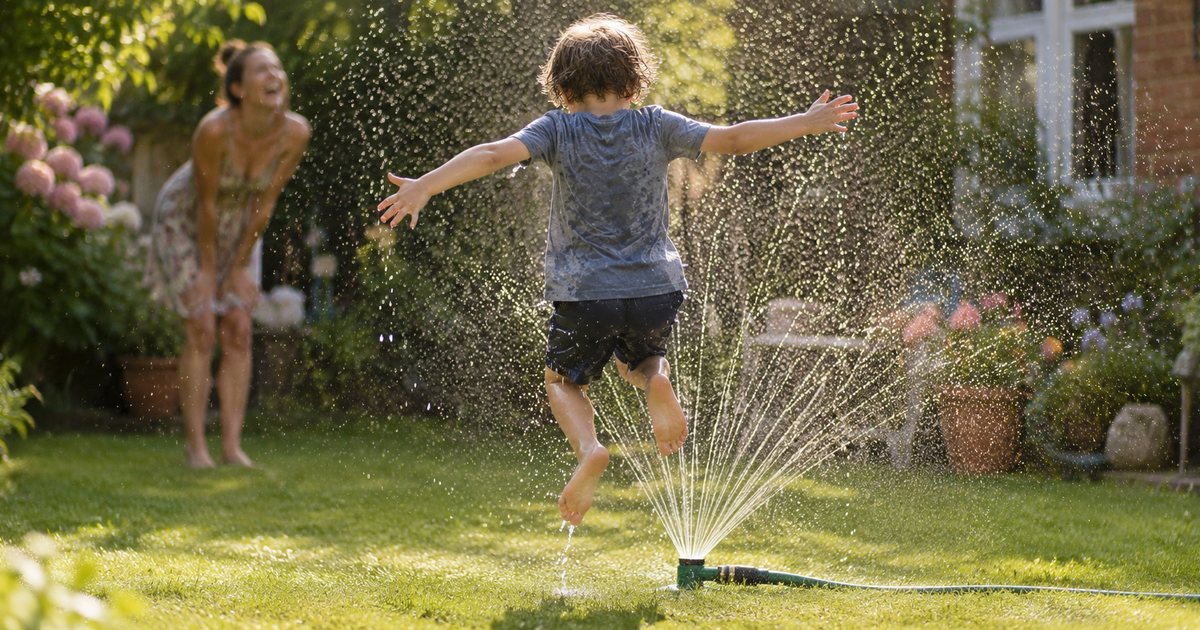
It's an ordinary Tuesday. Nothing special is happening. Then your child finds a puddle on the way home, stamps in it, and laughs so hard they have to hold on to the fence. Water up to the knees, socks ruined, face completely lit. You stand there holding the shopping and, for a second, you are laughing too.
That is joy. Not the planned kind, with a cake and candles, but the kind that turns up in a puddle on a Tuesday. It's one of the feelings we worry about least, because it looks after itself. And yet it's worth noticing, because the more we notice it, the more often it seems to come back.
How joy bubbles up
At 3 to 5, joy lives almost entirely in the body. It's the run that becomes a skip, the shriek on the swing, the whole-body wriggle when the dog comes to say hello. Little ones don't hide it or hold it in. They are simply full of it, and it spills.
Between 6 and 10, joy becomes a little quieter and a little more particular. It might be the deep, humming happiness of building a den all afternoon, or giggling with a friend until neither of them can speak. Older children start to know what makes them happy, and to go looking for it.
Joy can also hide. Sometimes it looks like silliness at the wrong moment, or noise when you'd hoped for calm. A child who can't stop bouncing at bedtime may simply be too full of a lovely day. That's the moment it can tip into overexcitement, which is joy that needs somewhere to land.
Why happiness comes so easily to small people
Young children live mostly in the present. They aren't yet carrying yesterday's list or tomorrow's worries, so a small good thing can take up the whole of their attention. A ladybird is not a minor event. It is the event.
Joy also grows from feeling safe and close. A child who knows they are loved has more room to play, and play is where most joy is found. When the grown-up nearby is relaxed enough to join in, even for a minute, happiness tends to double.
When joy fills them right up
Joy doesn't need fixing, but it does like company. When it arrives, the most useful thing is often to stop for a moment and be in it with them. Put down the bags. Look at what they're looking at.
Then name it lightly, without turning it into a lesson. "You look so happy." Let them feel what joy is like from the inside, so they'll recognise it again. If the joy is getting very loud or very fast, you don't have to squash it. Give it a shape instead: a run to the tree and back, a dance on the grass, a big shout into the wind.
Afterwards, help it settle by savouring it together. A quiet "that was lovely, wasn't it" on the walk home tells a child that happy moments are worth keeping.
- Pause with themPut down what you're carrying and look at what they're looking at, just for a minute.
- Name it lightlySay "you look so happy" so they learn what joy feels like from the inside.
- Give it a shapeIf the joy gets loud, offer a run to the tree, a dance or a shout into the wind.
- Savour it afterOn the walk home, remember the happy bit together so it feels worth keeping.
Phoenix Power, the fire birdIn the stories, Phoenix Power is the energy that makes children jump, run and celebrate, a fire made of joy that just needs a place to soar. Meet Phoenix Power
Growing joy outside
The simplest practice is a joy hunt on an ordinary walk. Each of you looks for one thing that makes you smile: a dog in a coat, a cloud like a teapot, the smell of someone's bonfire. Little ones can point; older children might keep a running list or draw their favourite at home. Over weeks, children get better at spotting small happiness, and that is a skill that lasts.
The other is to let weather be part of the fun rather than a reason to stay in. Rain means puddles, wind means kites made of carrier bags, frost means footprints. If getting everyone moving outdoors feels like hard work, our guide to getting kids active outdoors has plenty of easy ways in.
What you'll need
- Wellies for puddle stamping
- An unhurried walk with no plan
- A bit of grass for a dance
- A carrier bag kite for windy days
Our tips
- Put the bags down and look at what they're looking at, just for a minute.
- If the joy gets loud, give it a shape: a run to the tree and back.
- On the walk home, remember the happy bit together so it feels worth keeping.
For the fridge: one small step a day
- MonGo on a joy hunt on the walk home
- TueSay "you look so happy" when you see it
- WedStamp in a puddle together
- ThuDance on the grass for one song
- FriLeave an hour free with no plans
- SatFly a carrier bag kite in the wind
- SunAsk: what was the happiest moment?
Words to try
- "You look so happy right now."
- "Let's stop and enjoy this for a minute."
- "Where do you feel that happy feeling in your body?"
- "That was a really good bit of the day."
- Try asking (afterwards): "What was the happiest moment today?"
A week to try
For the fridge: one small step a day
- MonJoy hunt on an ordinary walk 20 mins
- TueStop and enjoy a happy moment with them 0 extra mins
- WedGo out in the rain on purpose 15 mins
- ThuSing, dance or shout into the wind 15 mins
- FriFly a carrier-bag kite on a windy day 20 mins
- SatLong outdoor play: build a den 1 hour
- SunAt bedtime: what was the happiest moment today? 10 mins
We will put each day on your family calendar, starting today, with the matching mission ready to open.
Questions parents ask
How can I help my child feel more joy every day?
Joy grows from time, closeness and play rather than treats or outings. Unhurried time outside, a grown-up who joins in now and then, and noticing small happy moments out loud all help. Keep some of each day free of plans, so there's space for joy to turn up on its own. It usually does.
Is it normal for my child's happiness to turn into wild behaviour?
Yes. Big happiness carries a lot of energy, and young children haven't yet learned to steer it. Rather than shutting it down, give it somewhere to go: a run, a dance, a jump off the step. Then help them slow down with something gentle, like a drink of water or a quiet sit together.
Should I worry if my child doesn't seem very joyful?
Children show happiness in different ways. Some are quietly content rather than bouncy, and that is joy too. If a child seems flat for a long stretch and has stopped enjoying things they used to love, it's worth gently looking closer. Our guide to when your child seems sad can help.
Wundoria is a set of eight story worlds for children aged 3 to 10, where every story ends with missions to do outside together. Our guides are written to support everyday family life; they are not medical advice. If you are worried about your child, talk to your GP or health visitor.
Play world one free All of feelings