"I'm tired." "My legs hurt." "Can't we just stay home?" You only suggested a walk, and somehow it has turned into a protest march. Your coat is on, theirs is on the floor, and getting a child off the sofa is taking more energy than the walk itself ever will.
If this worries you, you're in good company. In the 2025 Mott poll, unhealthy diet and lack of physical activity were both among parents' top child health concerns (Michigan Medicine). But more nagging rarely gets anyone out of the door. What tends to work is making movement feel like play again.
Bodies built to move, days built for sitting
Children are made for moving. Modern life, though, is full of sitting: car seats, classrooms, screens. UK guidance recommends at least 180 minutes of activity a day for pre-schoolers, spread across the day and including active outdoor play, and an average of at least 60 minutes of moderate-to-vigorous activity a day for 5 to 18 year olds (Oxford Health NHS).
Those numbers can look daunting written down. They aren't meant to be one long session, though. They're built from lots of small bursts scattered through the day. And for children, the best exercise hardly ever looks like exercise. It looks like chasing, climbing, splashing, balancing, hiding and poking about.
So the aim is fairly simple. Make movement part of the shape of the day rather than a special event, keep it playful, and do it together where you can.
The habit that lasts longer than the moaning
Children who learn to love moving their bodies tend to carry that into adulthood. Active habits protect sleep, mood, concentration, bones and heart health, and they give children a way of handling stress that lasts. A child who grows up knowing that a walk clears a busy head has something they can reach for for the rest of their life, long after they've forgotten how much they complained on the way.
Small ways to get the legs going
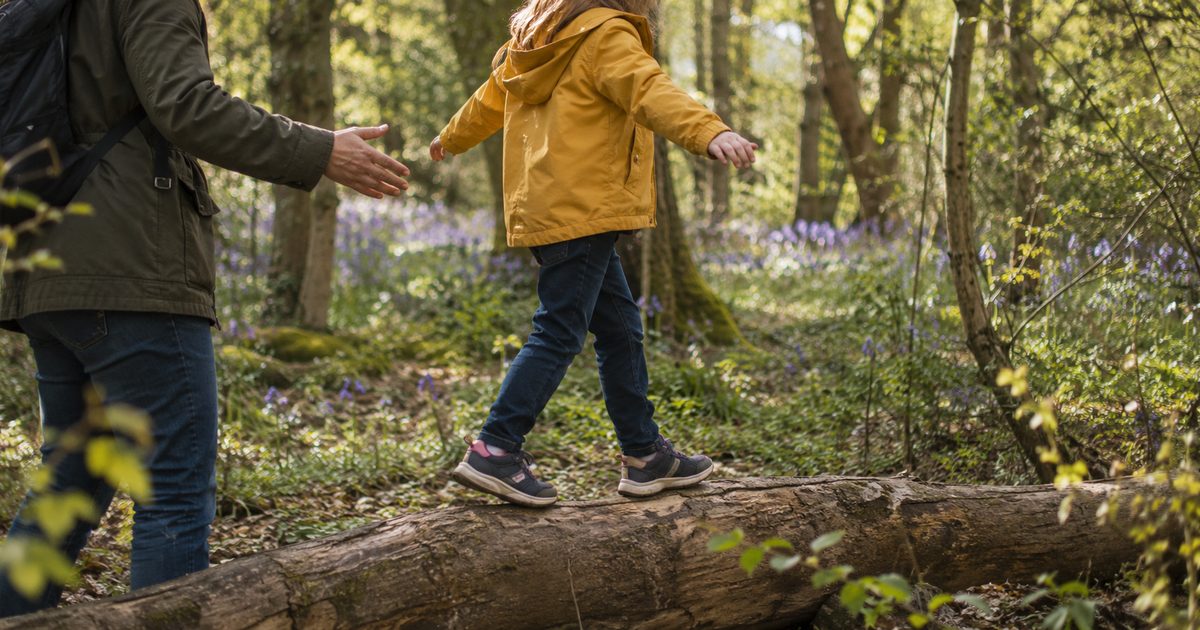
A walk "to get some exercise" is a hard sell to anyone, small or tall. A walk to find the biggest puddle, the reddest leaf or the hidden fairy door is a different thing entirely. Give each outing a mission: a scavenger list, a bug hunt, a race between lamp posts. With little ones, "let's find five different leaves" is plenty. Older children of nine or ten can plan the route and the mission themselves, which often gets them out of the door faster than any amount of asking.
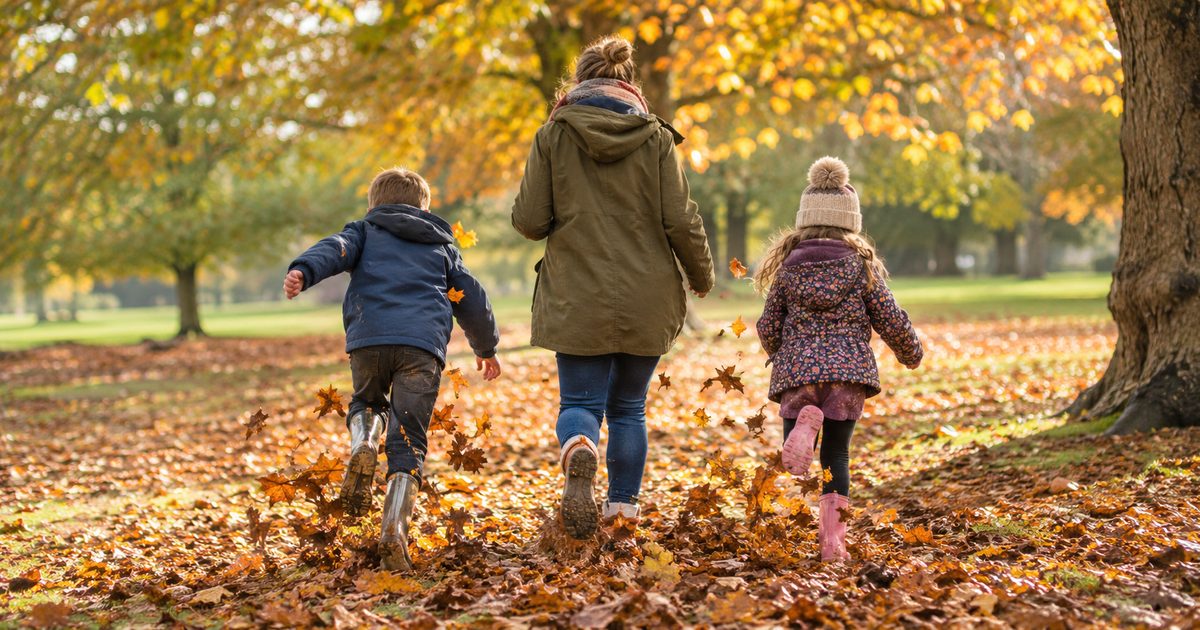
Then there's the weather, which is usually the excuse. Waterproofs, wellies and a warm hat open up every season, and some of the best days turn out to be the cold, wet ones. Puddle jumping, kicking through leaves, puffing frosty-breath dragon clouds. Three to five year olds tend to love a puddle-jump challenge; older children might be won over by a rainy-day walk that ends with hot chocolate.
Movement also hides very well inside the ordinary day. Walk or scoot part of the school run, take the stairs, dance while dinner cooks, have a quick garden race before bath time. None of it feels like much, but small bursts add up. Younger children can do "animal walks" to the bathroom, all frog hops and bear crawls. Older ones often take to a daily skipping or kick-ups challenge, especially if they can try to beat their own record.
And, where you can manage it, move together. Children copy what we do far more than what we say, which is slightly unnerving when you think about how long we spend sitting. A family walk, a bike ride or kicking a ball about in the park quietly shows that moving is something your family enjoys. With little ones, chase games work best, with you being chased. Older children might choose a regular family activity of their own, which makes it much more likely to stick.
- Give it a missionHunt for the biggest puddle, the reddest leaf or five different leaves instead of a walk for exercise.
- Every weatherWaterproofs and wellies open up puddle jumping, leaf kicking and frosty dragon-breath clouds.
- Hidden in the dayScoot to school, dance while dinner cooks, or frog hop to the bathroom: small bursts add up.
- Move togetherChase games, bike rides and family walks show your child that moving is something your family enjoys.

Phoenix Power, the fire birdIn the stories, Phoenix Power is the energy that makes children jump, run and celebrate, giving all that big aliveness a place to soar. Meet Phoenix Power
What you'll need
- Waterproofs, wellies and a warm hat
- A scavenger list or bug-hunt mission
- A scooter or bike for part of the school run
- A park, woods or beach for a weekend adventure
Our tips
- Give every walk a mission, like the biggest puddle or five different leaves.
- Small bursts count: frog hops to the bathroom, a garden race before bath.
- Join in where you can, because children copy what we do more than what we say.
Words to try
- "I wonder what we'll discover today."
- "Race you to the tree."
- "Your legs are so strong. Look how far they carried you."
- Try asking: "What animal shall we move like today?"
When to ask for more help
If your child often complains of pain when moving, tires much more quickly than others, avoids physical play because of coordination difficulties, or you're worried about their weight or growth, talk to your GP or school nurse.
Some days the walk will be ten minutes of grumbling to the end of the road and back. That still counts, and tomorrow there might be a puddle.
Playbook: one week
For the fridge: one small step a day
- MonScavenger-list walk 20 mins
- TueAnimal walks around the house 5 mins
- WedWalk or scoot part of the school run 15 mins
- ThuGarden race before bath 10 mins
- FriKitchen dance party 10 mins
- SatWoods, beach or big park adventure 2 hours
- SunFamily bike ride or ball game 1 hour
We will put each day on your family calendar, starting today, with the matching mission ready to open.
Questions parents ask
How much physical activity does a 4-year-old need each day?
UK guidance suggests pre-schoolers get at least 180 minutes of activity spread across the day, including active outdoor play. From age five, the aim is an average of at least 60 minutes of moderate-to-vigorous activity a day. It sounds a lot, but it's meant to build up from many small bursts like chasing, climbing, dancing and puddle jumping.
How do I get my child to go for a walk without moaning that they're tired?
Give the walk a mission instead of calling it exercise. Look for the biggest puddle, the reddest leaf or five different leaves, or race between lamp posts. Older children can plan the route and the mission themselves. Joining in matters too, because children copy what we do far more than what we say.
Is it OK to take young children outside to play when it's cold or raining?
Yes, with the right clothes, wet and cold days can be some of the best. Waterproofs, wellies and a warm hat open up every season for puddle jumping, kicking through leaves and frosty-breath dragon games. A rainy walk that ends with a hot chocolate at home can turn a grey afternoon into something your child looks forward to.
Feelings in this guide
Wundoria is a set of eight story worlds for children aged 3 to 10, where every story ends with missions to do outside together. Our guides are written to support everyday family life; they are not medical advice. If you are worried about your child, talk to your GP or health visitor.
Play world one free How Wundoria works