What grounding means
In this guide, grounding means simple sensory and mindfulness practices that help children notice their bodies, their breath and their surroundings in the present moment. These skills steady emotions, ease bedtime jitters and build a calm bridge from daytime energy to night-time rest. Mindfulness training has been linked with better sleep in children, and it can be taught in playful, age-appropriate ways.
Why grounding helps at bedtime
- Predictable routines mean calmer brains. Consistent, soothing pre-sleep routines support healthy sleep in young children.
- The wind-down window matters. A quiet routine of 20 to 30 minutes helps children move towards sleep.
- Mindfulness eases a busy body. Slow breathing and gentle movement are linked with longer, better sleep in children.
Set up a calm space first
- Lights: dim the house 60 to 90 minutes before lights out, and use a small warm lamp for the routine.
- Comfort: a cool but cosy room, with comfortable pyjamas and bedding.
- Screens: switch off televisions, tablets and phones at least an hour before bed.
- Nature touches: a leaf, shell or smooth stone on the bedside table to hold, and soft nature sounds at low volume.
- A steady rhythm: brush teeth, book, bed, at the same time each night.
Grounding ideas by age
Toddlers (2-4)
- Cuddle and rock while naming the body parts that are relaxing: toes, knees, tummy.
- "Soft animal paws": slow, quiet paw steps all the way to bed.
- A mini nature basket with two or three safe things to hold, look at and smell.
- Thirty seconds of "balloon breaths": hands on tummy, fill the balloon, let it go.
Preschoolers (4-6)
- A short "notice" game: two things you see, two you feel, one you hear.
- A story-style body scan: "Let your toes rest like pebbles by the river..."
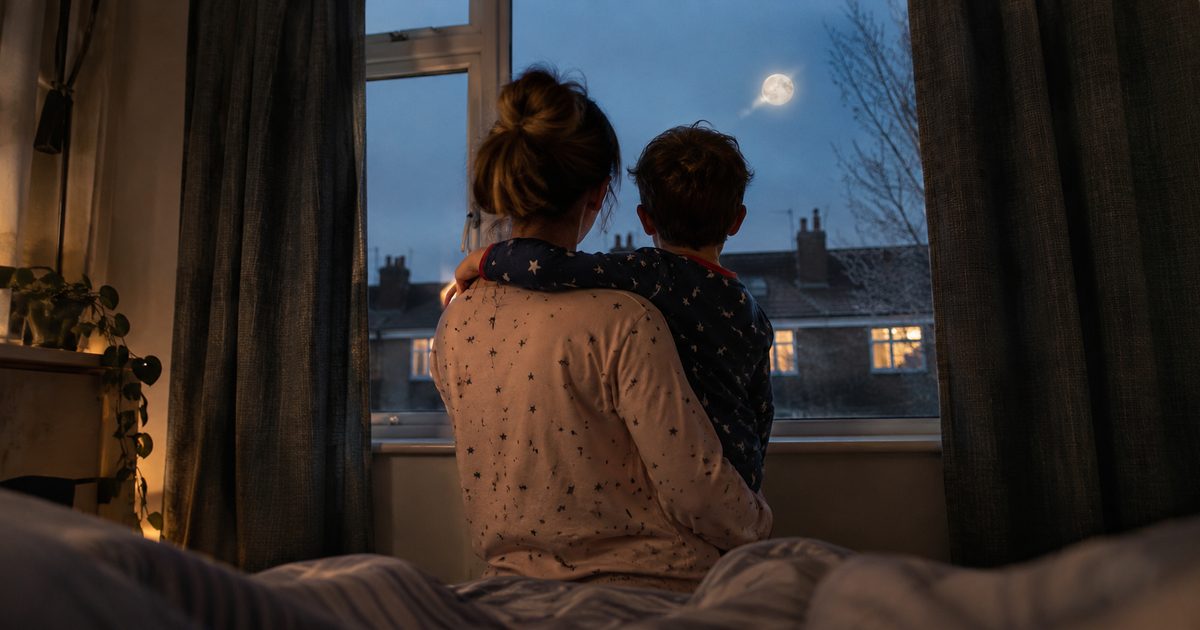
- A stargazing minute: find one star, or just the biggest dark cloud.
- A night sound hunt: "What night sound can you hear right now?"
Older children (7-12)
- The full 5-4-3-2-1 (five things you see, four you feel, three you hear, two you smell, one you taste), with a line in a journal.
- Paced breathing: in for four, hold for four, out for six, for one to three minutes.
- A quiet "moon walk" of two or three laps of the garden, feeling the feet on the ground.
- Gratitude: name one thing in nature they appreciated today.
Mix-and-match routines
Sensory grounding
The 5-4-3-2-1 countdown (3-5 minutes): see five things, feel four, hear three, smell two, taste one (toothpaste counts). Keep it gentle; it's about noticing, not getting it right.
Body scan story (2-4 minutes): "Imagine golden sunlight touching your toes. They relax... now your legs..." Move up the body in six to eight short steps.
Object focus (1-2 minutes): hold a smooth stone or shell. Is it cool or warm? Heavy or light? Then return it to the bedside table.
Breath-based grounding
Balloon breaths (1-3 minutes): hand on tummy, breathe in quietly through the nose and feel it fill, then let the air out slowly.
Mindful movement (2 minutes): a slow "crescent moon" stretch and a "tree sway", then lie down and breathe.
Nature-connected grounding
Always supervise outdoors and check the ground is clean and safe before going barefoot.
- Cloud-watch or stargaze at twilight, breathing slowly.
- Name three night sounds: which is closest, which is farthest?
- One or two minutes barefoot on safe grass: cool, tickly or firm?
- Pick up one leaf or stone, thank it, and place it on a "peace shelf" indoors.
- 5-4-3-2-1Gently notice five things you see, four you feel, three you hear, two you smell and one you taste.
- Body scan storyImagine golden sunlight touching the toes, then let it move slowly up the body as it relaxes.
- Hold a stoneHold a smooth stone or shell: is it cool or warm, heavy or light? Then put it back to rest.
- Balloon breathsHand on tummy, breathe in quietly through the nose to fill the balloon, then let it out slowly.

The Wind People, the breath of the worldIn the stories, the Wind People turn breathing into something magical to play with: a slow, deep breath is welcoming the air, welcoming life. Meet The Wind People
A seven-night starter plan
| Night | Add this |
|---|---|
| 1-2 | Teeth, pyjamas, dim lights; balloon breaths; a short noticing game; one book |
| 3-4 | Add a body scan story; try nature sounds in place of the book |
| 5 | A short twilight stroll or window stargazing; one thing from nature you liked today |
| 6 | Keep what worked, drop what didn't; add a stone or shell to hold |
| 7 | Make a routine card with three or four steps your child chooses |
Celebrate consistency, not perfection. Consistency is the most important part of any bedtime routine.
When things get stuck
- If your child resists: offer choices inside the routine: "stargazing or nature sounds tonight?" Keep it short and predictable.
- If bedtime keeps creeping later: start winding down five to ten minutes earlier each week until you reach the time you want.
- If they wake in the night: calmly return them to bed and keep it boring. Consistent responses help children learn to settle themselves.
- Food and drink: avoid fizzy and caffeinated drinks after lunch, and finish big meals well before the routine.
Little scripts to try
Forest breathing: "Breathe in like smelling a flower... breathe out like blowing a dandelion. Name one forest sound you can imagine. Feel your body as heavy as a rock in soft moss."
Pebble body scan: rest a smooth pebble on the tummy and feel it rise and fall; move it to the knees, then the hands, then put it to bed on the bedside table.
Questions parents ask
Is grounding the same as "earthing"?
Here, grounding means sensory and mindfulness practices that help children feel calm and present. We make no medical claims about earthing; for sleep, consistent routines and mindfulness come first.
What if my child has sensory sensitivities?
Offer choice and gentleness. Swap textures (stone for soft fabric), shorten the steps and avoid strong scents.
How soon will we see a difference?
Many families notice smoother bedtimes within a week once the routine is consistent.
When should we talk to a doctor?
If your child regularly struggles to fall or stay asleep, snores loudly or shows changes in behaviour, talk to your GP or health visitor.
Feelings in this guide
Wundoria is a set of eight story worlds for children aged 3 to 10, where every story ends with missions to do outside together. Our guides are written to support everyday family life; they are not medical advice. If you are worried about your child, talk to your GP or health visitor.
Play world one free How Wundoria works