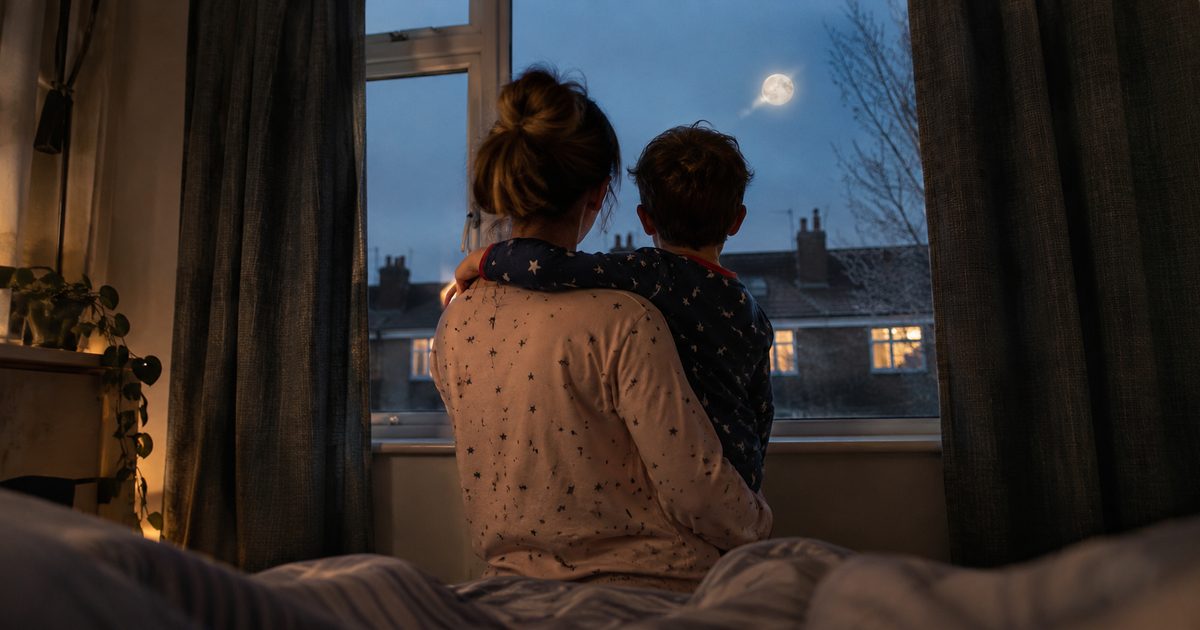
It's 2am. There's a small figure standing by your bed, or a voice calling from down the landing: "Mummy, I'm awake." You stumble through, settle them, crawl back under the duvet, and an hour later it happens again. After a few weeks of this, everyone in the house is frayed at the edges, you most of all.
If that's your house right now, you're far from alone. Night waking is very common in young children. The skills that help them settle themselves back to sleep can be grown gently, and a surprising amount of that work happens in the daytime.
Why they wake and call for you
Everyone wakes briefly several times a night, between one sleep cycle and the next. Adults usually roll over and never know it happened. A child wakes up properly when something about the room has changed since they fell asleep. They drifted off with you beside them, or with the light on, and now it's dark and they're on their own. Their brain notices the difference and calls for help.
The body clock plays its part too. NHS guidance stresses keeping a calm, predictable bedtime routine at the same time each night (NHS), and consistent bedtimes and wake times reinforce the body's natural rhythm. Daylight and activity during the day deepen sleep at night.
So what helps is this: let children fall asleep in the same conditions they'll wake up in, anchor the body clock with light and movement, and keep your night-time visits calm, brief and, frankly, boring.
Finding their own way back
A child who learns to settle themselves back to sleep has something that will serve them for a long time: on sleepovers, on school trips, in a new home, through exams and in the restless nights of adolescence. Learning that waking in the dark is safe and ordinary, and that they can find their own way back to sleep, is a quiet sort of independence.
What helps, from breakfast to bedtime
Get some daylight in the morning, and some time outside every day. Morning light sets the body clock, and active outdoor play builds the good, honest kind of tiredness. Aim for time outside every day, ideally in the morning, whatever the weather is doing. With little ones, that might be breakfast near the window and then out of the door. Older children, nine or ten, could walk or cycle part of the way to school.
Keep the same wake-up time every day, weekends included. It's not the most popular advice on a Saturday, but a steady wake time does more for night sleep than an early bedtime, because it anchors the whole 24-hour rhythm. Small children often like a "sun clock" or a light that shows when it's morning. Older ones can set their own alarm.
Help them fall asleep the way they'll wake. Little by little, help your child get to sleep without you right beside them: sit on the bed, then by the door, then pop in and out. If they fall asleep with a soft night light, leave it on all night. Familiar conditions mean fewer full wakings. With younger children, move your chair a little closer to the door every few nights. Older ones might fall asleep to a quiet book or an audio story on a timer they set themselves.
When they do wake, keep it calm, brief and boring. Lights low, voice soft, very few words. Walk them back, tuck them in, say your goodnight phrase and leave. It's hard when you're half asleep and they want a chat, but the chats, stories and cuddles belong to bedtime and the morning. For little ones, use the same three words every time, something like "Night night, sleep tight." Older children can agree with you, in daylight, what they'll do if they wake.
- Morning lightGet outside every day, ideally in the morning, so daylight sets the body clock and play builds tiredness.
- One wake timeKeep the same wake-up time every day, weekends included, to anchor the whole 24-hour rhythm.
- Same as they wakeMove your chair a little nearer the door every few nights, and leave any night light on all night.
- Calm and boringIf they wake, keep lights low and words few: walk them back, tuck them in, say goodnight and leave.

Moon Smile, the crescent moonIn the stories, Moon Smile's smile is there when the lights go out and grown-ups say goodnight, a constant, kind presence in the dark. Meet Moon Smile
What you'll need
- Time outside each morning, whatever the weather
- One wake-up time, weekends included
- A soft, warm night light left on all night
- A short goodnight phrase you use every time
Our tips
- Let them fall asleep in the same room conditions they will wake up in.
- Move your chair a little nearer the door every few nights.
- Save the chats and cuddles for bedtime and morning, and keep night visits brief.
Words to try
- "It's still night-time. The moon is keeping watch. Back to bed."
- "I'll pop back and check on you soon."
- "You found your way back to sleep last night. Well done."
- Try asking (in the morning): "Did you hear anything outside in the night?"
When to ask for more help
If your child snores loudly, seems to stop breathing for moments while asleep, wakes in great distress many times a night, or is exhausted during the day, speak to your GP or health visitor.
Playbook: one week
For the fridge: one small step a day
- MonSet one wake time for the whole week 0 extra mins
- TueMorning outdoor time 15 mins
- WedMove your bedtime chair a little further away 0 extra mins
- ThuAgree the night-time words together 5 mins
- FriBig afternoon of outdoor play 1 hour
- SatSame wake time, morning walk 30 mins
- SunCelebrate any nights they settled themselves 5 mins
We will put each day on your family calendar, starting today, with the matching mission ready to open.
Questions parents ask
Why does my 3-year-old wake up every night and call for me?
Everyone wakes briefly between sleep cycles, but children often wake fully when something has changed since they fell asleep, such as a parent no longer beside them or a light now off. Gradually helping them fall asleep in the same conditions they'll wake in, alongside plenty of daylight and a steady wake time, usually means fewer full wakings.
What should I do when my child wakes up in the middle of the night?
Keep it calm, brief and boring. Use low lights, a soft voice and few words, walk them back to bed, say your usual goodnight phrase and leave. Saving chats, stories and cuddles for bedtime and the morning helps your child learn that night-time is for sleeping and that they can find their own way back to sleep.
Does a set wake-up time or an early bedtime matter more for a child who wakes in the night?
A steady wake-up time, kept even at weekends, often does more for night sleep than an early bedtime, because it anchors the whole 24-hour body clock. Pair it with a calm, predictable bedtime routine and time outdoors each day, ideally in the morning. If broken nights carry on and your child is exhausted in the day, your GP or health visitor can help.
Feelings in this guide
Wundoria is a set of eight story worlds for children aged 3 to 10, where every story ends with missions to do outside together. Our guides are written to support everyday family life; they are not medical advice. If you are worried about your child, talk to your GP or health visitor.
Play world one free How Wundoria works