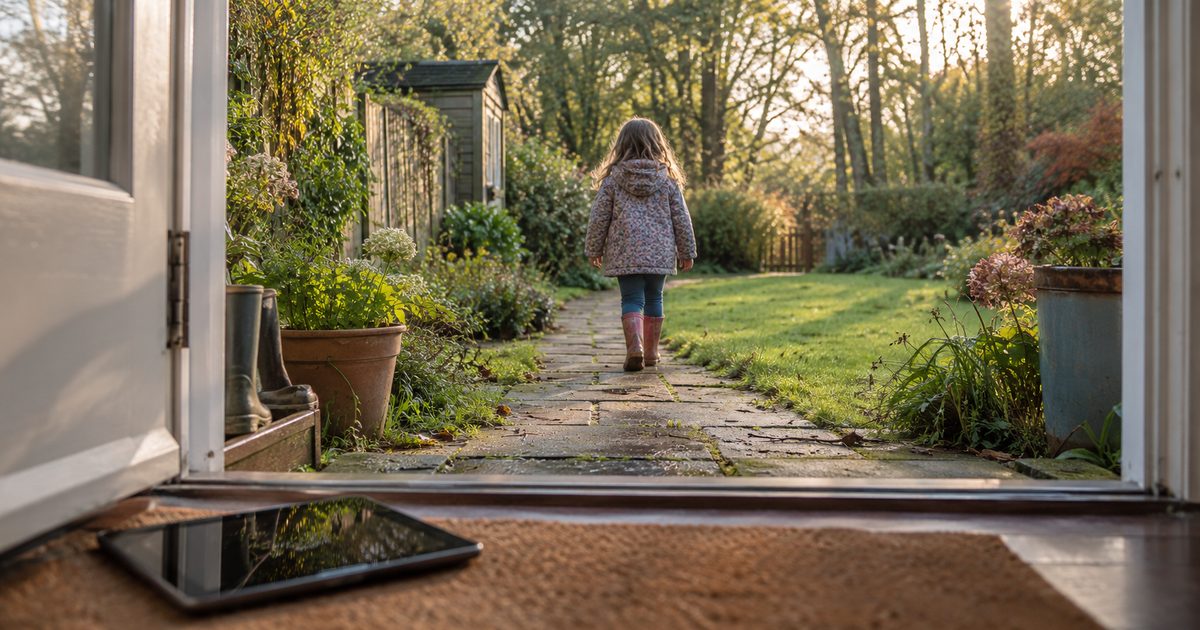
Half past five, and the pasta water is nearly boiling. The day has been long, and the tablet has bought you twenty precious minutes of quiet. Then you say "time to stop" and the whole room changes. Tears, bargaining, a small fist thumping the sofa cushion. And somewhere under your ribs, the pang every parent knows: did I do this?
You didn't. You are raising a child in a world that has been carefully built to hold attention, and you noticed. That noticing is where the good part starts.
Why it's so hard to put down
Screens are designed that way. Bright colour, quick reward and no natural ending keep any brain leaning in, and a young brain has the least braking power of all. The part that handles stopping, switching and waiting (the prefrontal cortex) keeps developing well into the twenties. So when your four-year-old can't let go, it isn't a flaw in them. It's the design doing what it was made to do.
You are far from alone in worrying about it. In a 2025 survey of US parents, more than half said they had felt their child was addicted to screens, and 60% felt guilty about screen time (Lurie Children's). The same survey notes the American Academy of Pediatrics' guidance of no more than an hour a day for children aged 2 to 5.
The idea that tends to help most is a gentle one. Screen use usually causes trouble when it replaces something, such as sleep, movement, play or time together. So the question can quietly shift from "how do I get rid of the screen?" to "what can I grow that is even more alive?"
The appetite you're feeding, years from now
A four-year-old who finds out that the garden, the park and the puddle are where the best feelings live will carry that into every age. At eight, it's the child who drifts outside when bored. At twelve, it's the one who can put a phone face down and go for a walk with a friend. At sixteen, it's a teenager with somewhere to go when the online world feels heavy. You aren't really building a rule here. You're building an appetite, slowly, a bit at a time.
Small changes around the edges of the day
Start with the bookends. Keep the first hour after waking and the last hour before bed free of screens. Mornings can go to daylight, breakfast and a moment by the window or the open door; evenings to bath, story and dimmed lights. Sleep charities advise switching screens off an hour before bed to protect melatonin, the sleep hormone (The Sleep Charity, via Royal Wolverhampton NHS). With children of 3 to 5, it helps to make it a little story: the tablet goes to sleep before you do. Nine- and ten-year-olds can agree the hours with you and write them down, which makes it theirs as much as yours.
Then there's the five-senses walk. Once a day, even for ten minutes, step outside and look for one thing for each sense: something you can see, hear, smell, touch and taste (a piece of fruit you brought from home works well; never taste anything picked on the walk unless a grown-up is sure it's safe). Real-world senses are slower and richer than a screen's, and over time the brain learns that quiet things can be delicious too. For the youngest, one sense per walk is plenty. By 9 or 10, let them lead and choose the route.
Most screen tears happen at the switch-off, not while they're watching, so it's worth giving the ending a soft landing rather than a cliff edge. A two-minute warning, a natural stopping point, and the next thing already waiting: shoes by the door, a snack on the step, a small job in the garden. The brain finds it much easier to move towards something than away from something. Little ones often like a sand timer they can watch run down. Older children can set the timer themselves and own the stop.
Finally, keep screens in the shared places. Devices live in the living room, get used together where possible, and charge outside bedrooms at night. Watching alongside your child turns a lonely pull into a shared story you can talk about later on a walk. With 3- to 5-year-olds, watch together most of the time. With 9- and 10-year-olds, pick one show a week to watch and chew over together.
None of this has to happen every day to count. Some evenings the tablet will run long because you needed it to, and that's alright.
- Screen-free bookendsKeep the first hour after waking and the last hour before bed free of screens.
- Five-senses walkStep outside each day and find one thing to see, hear, smell, touch and taste.
- A soft landingGive a two-minute warning and have the next thing waiting, like shoes by the door.
- Shared placesKeep devices in the living room, watch together, and charge them outside bedrooms.

Bunny Bright, the heart sparkIn the stories, Bunny Bright reminds children that their body is something to marvel at: hands that touch, breath that moves, feet that dance. Meet Bunny Bright
What you'll need
- Ten minutes outside each day
- A sand timer for the switch-off
- Shoes waiting by the door
- A charging spot outside bedrooms
Our tips
- Have the next thing ready before the screen goes off, so they move towards something.
- Keep the first and last hour of the day for daylight, stories and dim lights.
- On the evenings the tablet runs long, let it go. Tomorrow is another go.
Words to try
- "Two more minutes, then we're going to find the moon."
- "It's hard to stop something fun. I find it hard too."
- "The tablet needs a rest. Shall we see what the garden is doing?"
- Try asking: "What did you notice outside today that nobody else saw?"
When to ask for more help
If screen time is crowding out sleep, eating or friendships, or stopping leads to distress that lasts long after the device has gone, talk to your health visitor, school nurse or GP. They can help you look at the bigger picture without judgement.
Playbook: one week
For the fridge: one small step a day
- MonScreen-free first hour; breakfast by the window 0 extra mins
- TueFive-senses walk (sight and sound) 10 mins
- WedSand-timer switch-off, then shoes on and out 15 mins
- ThuFive-senses walk (smell and touch) 10 mins
- FriFamily film together, then a moon walk 20 mins
- SatLong outdoor morning, devices stay home 1-2 hours
- SunAgree next week's screen hours together 10 mins
We will put each day on your family calendar, starting today, with the matching mission ready to open.
Questions parents ask
How much screen time is OK for a 4-year-old?
The American Academy of Pediatrics suggests no more than about an hour a day for children aged 2 to 5. The bigger question is what screens are replacing, such as sleep, movement, play or time together. Keep the first hour after waking and the last hour before bed screen-free, and watch together where you can.
Why does my child have a meltdown every time I turn the tablet off?
Screens are built with no natural ending, and a young brain has very little braking power, so the switch-off is where most tears happen. Give a two-minute warning, stop at a natural pause, and have the next thing ready, like shoes by the door or a snack on the step. Moving towards something is far easier than moving away.
Should my child have a tablet in their bedroom at night?
It usually helps to keep devices out of bedrooms and charging in a shared space overnight. Screens in the hour before bed can disrupt melatonin, the sleep hormone, and a device within reach makes the evening harder to wind down. Keeping screens in the living room also means more of their use becomes something you share and can talk about together.
Feelings in this guide
Wundoria is a set of eight story worlds for children aged 3 to 10, where every story ends with missions to do outside together. Our guides are written to support everyday family life; they are not medical advice. If you are worried about your child, talk to your GP or health visitor.
Play world one free How Wundoria works