You know the moment. It's late afternoon, everyone is tired, the house feels too small, and your child is bouncing off the furniture or melting into the carpet. You open the back door mostly out of desperation. And within a few minutes something shifts. They crouch down to look at an ant. The shouting stops. You breathe out properly for the first time since lunch.
That shift is what people mean by grounding. It isn't a technique, and it doesn't need special kit or a forest. It's simply what happens when a small body meets the real ground, the real weather and the real, slow pace of living things. The world indoors is loud and fast for young children. Outside, nothing is in a hurry. Grass grows at the speed it grows. A snail will not be rushed. Children seem to borrow that steadiness, and if we're honest, so do we.
What follows are more than twenty-five small ways in. None of them need to be done well. Most of them work best when you do them badly, often, and together.
Before you go: a little kit and a lot of permission
It helps to keep a few things by the door so going out feels easy rather than like an expedition: a small magnifying glass, a notebook and pencil, hand wipes, spare socks and a few plasters. Sun cream and a hat in summer, an extra layer in winter.
Have a quick look around any space before bare feet or small hands go exploring, and keep shoes on where the ground is rough or you can't see what's in the grass.
Then give yourself permission to keep it small. Ten minutes on the back step counts. You don't need to know the names of birds or trees. The writer Rachel Carson believed that what a child needs most is not facts but one grown-up who will share the wonder with them. You can be that grown-up while knowing almost nothing at all. Let your child set the pace, follow what catches their eye, and try not to turn it into a lesson.
Barefoot walking
The first barefoot walk will probably last about forty seconds. The grass is colder than anyone expected, someone treads on something squishy, and there's a dash back inside for socks. That's fine. Try again tomorrow, and the day after.
Once the surprise wears off, bare feet become a way of listening with the whole body. Walk slowly together, like two old tortoises. Spread your toes. Roll from heel to toe. Stand very still and notice: is the ground cool or warm, soft or firm, tickly or smooth? Warm paving stones, damp grass and a smooth log all feel completely different, and children love to compare.
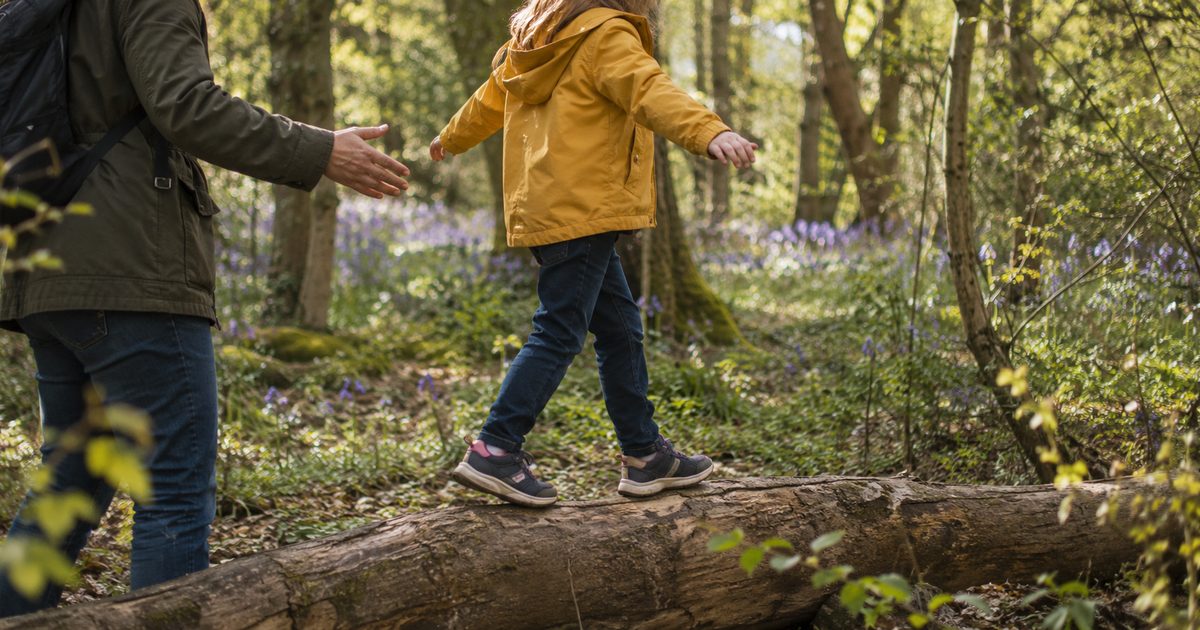
Little ones (3 to 5) might count their steps or hum a slow song as they go. Older children (6 to 8) often enjoy a balance line along a rope or a fallen branch.
- Go slowlyWalk together very slowly, like two old tortoises, and expect the first try to be short.
- Spread and rollSpread your toes wide and roll gently from heel to toe with every step.
- Stand and noticeStand still and feel: is the ground cool or warm, soft or firm, tickly or smooth?
- Compare the groundTry warm paving stones, damp grass and a smooth log, and talk about how each one feels.
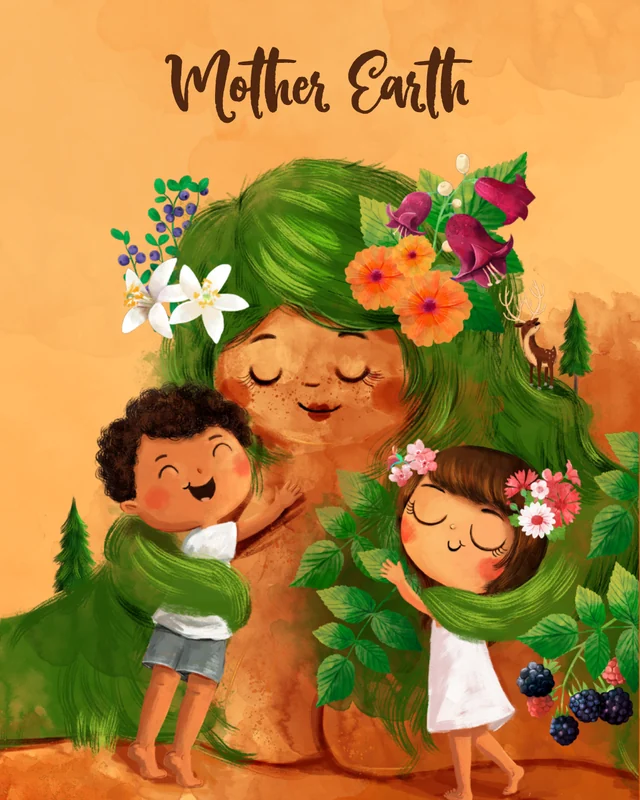
Mother Earth, the living planetIn the stories, walking barefoot on grass is Mother Earth's favourite way to say hello, a reminder that we are not just on the earth but of it. Meet Mother Earth
Looking up at night
There is something about lying on your back under the sky that makes worries feel smaller. You don't need a clear country sky. Even in a town with streetlights, the moon and a few bright planets are enough.
Wait until half an hour or so after sunset, when it's properly dark but not too late. Bring a blanket, keep the pyjamas on, and lie down together. Is the moon a thin smile tonight, or a round biscuit? Choose one star and take ten slow breaths while you look at it. Before you go in, whisper one wish and one thank-you to the night.
Younger children love pulling moon faces to match the shape in the sky. Older ones might keep a simple star diary with the date, the weather and a quick sketch of the moon. On cold or cloudy nights, a window works too: lights off, curtains open, faces close to the glass.
Try asking: "If the moon could tell you a bedtime story, what would it be about?"
Growing something
Gardening teaches patience in a way no grown-up ever can, because you cannot hurry a seed. You can only water it, wait and check again tomorrow. For a child, the morning the first green loop pushes through the soil feels like magic, and in a way it is.
Start with things that grow quickly and reward you: radishes, lettuce and beans, or herbs that smell wonderful when you brush them, like basil, mint and lavender. Marigolds and nasturtiums give bright colour for very little effort.
Poke a few holes in the bottom of a pot, fill it with soil, and sow the seeds about one knuckle deep. Water slowly near the roots. Then make checking part of the day: is the soil dry or damp? Has anything happened yet? Snip and sniff the herbs, and taste what's safe to eat when the time comes.
A sticker on a calendar each watering day works well for little ones. Older children might measure their plant and draw a growth chart. No garden? A row of yoghurt pots on a sunny windowsill is a perfectly good one.
- Pick quick growersStart with radishes, lettuce, beans or herbs like basil and mint that reward you fast.
- Sow the seedsPoke holes in a pot, fill it with soil and sow the seeds about one knuckle deep.
- Water slowlyPour water gently near the roots, and give a sticker on the calendar each watering day.
- Check each dayMake checking part of the day: is the soil dry or damp, and has anything happened yet?
Hunting for small things
Asking a child to look for something specific changes the way they move through a place. They slow down. They crouch. A rushing brain becomes a curious one. Give each hunt ten to twenty gentle minutes, and use picture cards for children who aren't reading yet.
- A colour hunt. Five greens, three browns, one yellow. You'll be amazed how many greens there are once you start counting.
- A texture hunt. Something smooth, something rough, something bumpy, something soft.
- A sound hunt. A bird, a rustle, a faraway car, and finally the sound of your own breathing.
- A shape hunt. A heart-shaped leaf, a spiral shell, a stone that's perfectly round.
Finish with a little show and tell using photos or drawings, so the treasures stay where they belong. In the city, hunt for weeds pushing through cracks, cloud shapes, birds on wires and the patterns in tree bark.
Five-minute moments
On the days when there's no time and no energy, these still count. Each one takes about five minutes, and most can happen on a doorstep.
- Slow tree. Stand like trees in the wind and see who can sway the slowest.
- Cloud breaths. Breathe in while you trace the edge of a cloud with your finger, and breathe out as you finish its shape.
- The warm stone. Find a stone that's been sitting in the sun and pass it gently between your hands.
- Leaf rubbing. Lay paper over a leaf and crayon across it until its veins appear like a tiny map.
- Listening lights. Red means ten seconds of silent listening. Amber means whisper what you heard. Green means point to where it came from.
- Three, two, one. Sit still and notice three things you can see, two you can hear and one you can smell.
- Shadow high fives. Line your hand up with your shadow's hand and give it a high five.
- A thank-you pebble. Whisper a thank-you to a small pebble and carry it in a pocket for the day.
- Hands on the earth. Press both palms flat on the grass or soil and count slowly to ten.
- Find the sun. Close your eyes and point to where the warmth on your face is coming from.
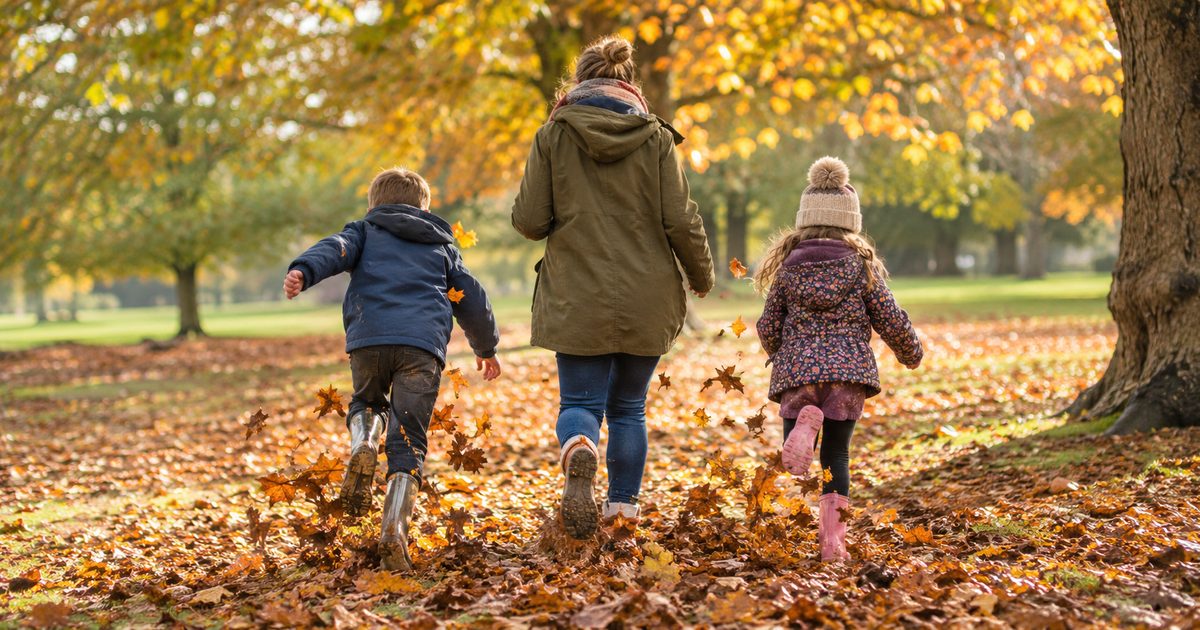
- Puddle jumping. After rain, put the wellies on and find the biggest puddle you can. Nothing grounds a child quite like a splash.
- Breakfast for the birds. Scatter a few seeds in the same spot each morning and watch from the window to see who comes.
When outside is small
You don't need a garden, or even much of a view, to bring the outside in.
- A balcony tray. A shallow tray of pebbles, sand and soil to dig, sort and pour, changed every week or so.
- The window frame. Tape a rectangle onto a window and draw what you see inside it on different days. Watch how it changes.
- Adopt a tree. Choose one tree on your street and visit it each week. Notice its bark, who lives on it, and how it changes through the year.
- A night-sky nook. Lights off, window open a crack, a moon diary on the sill.
- A sniffing shelf. Little jars of herbs and spices to open, smell and compare.
- Rain watching. Listen to rain against the glass and trace the drops racing down.
A gentle week to start with (ages 3 to 8)
If it helps to have a shape to the week, here's one to borrow. Swap anything that doesn't suit you, change it with the seasons, and don't worry about the days you miss.
| Day | Outside | Afterwards |
|---|---|---|
| Mon | Barefoot walk (10 mins) | Talk about which ground felt best |
| Tue | Colour hunt (15 mins) | Show and tell three finds |
| Wed | Plant some herbs (15 mins) | Start a watering sticker chart |
| Thu | Three, two, one (5 mins) | Draw one thing you noticed |
| Fri | Looking up at night (10 mins) | Ten slow breaths under the sky |
| Sat | Sound hunt in the park (15 mins) | Draw a map of the sounds |
| Sun | Thank-you pebble walk (10 mins) | Leave the pebble beside a plant |
For every kind of child
Every child meets the outdoors differently. Some will race off; others will stand at the door for a long time first, and that's alright.
For neurodivergent children, a simple picture plan of what's going to happen can make all the difference, along with doing things in the same order each time. Ear defenders can turn a noisy park into a manageable one. For children with sensory sensitivities, start with just one sense and one short spell, with textures they can predict, and build up slowly.
Know which pollens bother your child, wash hands after playing in soil, and never eat a plant unless a grown-up knows exactly what it is. And when you meet wildlife, the rule is the same for everyone: watch quietly, don't disturb, and leave every home as you found it.
Questions parents ask
How often should we do grounding activities?
Little and often works far better than big and rare. A few minutes outside every day, or fifteen to twenty minutes three or four times a week, is plenty for most families. What matters most is that it becomes an ordinary part of the week, like brushing teeth, rather than a special event.
My child resists going outside. What helps?
Offer a small choice rather than a big ask, such as "shall we check the plants or look for the moon?" Keep it short, go with them rather than sending them, and notice the tiny wins out loud. Often the hardest part is the doorstep. Once they're out, most children find their own reason to stay.
Can we ground in bad weather?
Yes. Rain is wonderful for it, with waterproofs and wellies on. On the days when going out really isn't possible, window stargazing, listening to rain against the glass, a sensory tray or caring for a plant all count.
Is barefoot walking safe?
Yes, on ground you've checked and know to be clean. Keep shoes on for rough paths, beaches with sharp shells or anywhere you can't see what's underfoot, and start with short spells on soft grass.
Feelings in this guide
Wundoria is a set of eight story worlds for children aged 3 to 10, where every story ends with missions to do outside together. Our guides are written to support everyday family life; they are not medical advice. If you are worried about your child, talk to your GP or health visitor.
Play world one free How Wundoria works