What are affirmations for kids?
Affirmations are short, positive sentences children say to themselves, out loud or in a whisper. For ages 3 to 8, the best affirmations are:
- Simple: five to eight words.
- Concrete: linked to the senses or to nature.
- In the present tense: "I am..." "I can..."
- Action-based: "I take slow breaths," "I use gentle hands."
Used often, affirmations build a habit of kind self-talk, support children in managing their feelings, and strengthen confidence through everyday challenges, from tying shoes to making new friends.
Why nature-inspired affirmations work
Trees, stars, waves and mountains are easy for children to picture, which makes the words memorable and grounding.
- Sensory anchors (the feel of wind, the warmth of sun) help little ones notice their body and breath.
- Safe pictures ("I am strong like a tree") connect inner strength to something familiar.
- Nature's rhythm (waves in and out) matches breathing, perfect for bedtime or big feelings.
How to teach affirmations to young children
- Keep it playful and short. Choose one to three affirmations a week and use call and response: you say it, your child echoes it.
- Pair it with breath and movement. "Smell the flower" (breathe in), "blow the dandelion" (breathe out), then the affirmation. Add a hand on the heart, tree-pose arms or a star stretch.
- Attach it to routines. Before shoes in the morning, after school, or after the story at bedtime.
- Model it. Say your own grown-up version ("I can handle busy mornings"). Invite, never force.
- Make it visual. Put affirmation cards on the fridge or bedside table, each with a nature sticker or drawing.
- Short and playfulChoose one to three affirmations a week and use call and response: you say it, they echo it.
- Add breath and movementSmell the flower, blow the dandelion, then say the words with a hand on the heart or tree arms.
- Tie it to routinesSay it at the same moments each day: before shoes, after school or after the bedtime story.
- Say yours tooModel your own grown-up version and keep it an invitation, never something you force.
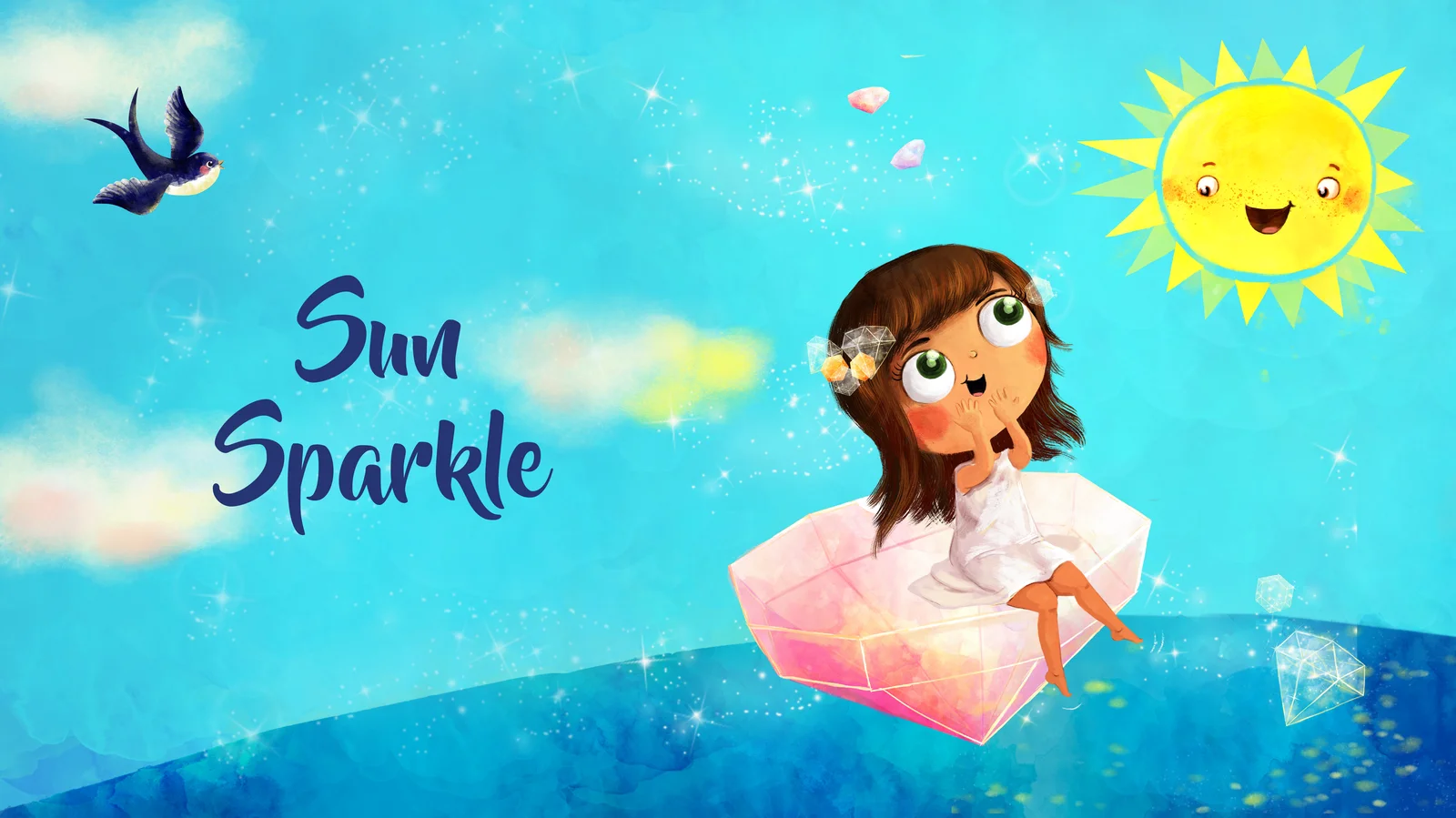
Sun Sparkle, the smiling sunIn the stories, Sun Sparkle shows that a child's brightness is always there, even on cloudy days, so "Today I shine like the sun" is simply remembering. Meet Sun Sparkle
A calm set (for big feelings and bedtime)
Pair these with three slow breaths.
- "I am strong like a tree."
- "My breath is waves, in and out."
- "I am safe and cared for."
- "I feel my feet on the ground."
- "I am calm like a quiet pond."
- "I can pause and breathe."
- "I am steady like a mountain."
- "I shine gently like the moon."
- "I can listen like an owl."
Try asking: "Where do you feel calm in your body?" Tummy, hands, toes: tie that feeling to the words.
A confidence set (for trying new things)
- "I can learn one step at a time."
- "I try, try again, like the river flows."
- "Mistakes help me grow, like seeds."
- "I am curious like a fox."
- "I practise and get stronger."
- "I can ask for help."
- "I keep going like a little turtle."
- "I am proud of my effort."
A kindness set (for friendship and gentle behaviour)
- "I use gentle hands and words."
- "I am kind like warm sunshine."
- "I listen with my heart."
- "I can take turns and share."
- "I say sorry and try again."
- "I include others in play."
- "I care for nature and friends."
Morning and bedtime
Morning (energy and intention): "Today I shine like the sun." "I try new things." "I make kind choices." Do a big stretch and two balloon breaths, choose one affirmation, smile in the mirror and head out.
Bedtime (calm and safety): "I rest like the moon in a soft sky." "My body is safe and cosy." "I breathe slowly and feel peace." "I am loving and loved." After the story, with the lights low, put a hand on the heart and whisper one affirmation three times.
Nature play that brings the words to life
- Affirmation treasure walk: collect a leaf, a stone and a stick; each one is an affirmation said three times.
- Tree pose challenge: stand tall, say "I am strong like a tree", and hold for ten seconds.
- Star count: point to five stars or window lights and give each a calm word: safe, cosy, loved, peaceful, sleepy.
- Jar of sunshine: write confidence affirmations on yellow slips and pick one each morning.
A seven-day starter plan
| Day | Morning | Bedtime |
|---|---|---|
| 1-2 | "Today I shine like the sun" (x3) | "I breathe slowly and feel peace" (x3) |
| 3-4 | "I try new things" and two balloon breaths | "I am calm like a quiet pond" and listen for one night sound |
| 5 | "I can learn one step at a time" and a high five | "I am steady like a mountain", hand on tummy |
| 6 | "I am a good friend" and plan one kind act | "I use gentle hands and words" |
| 7 | Your child chooses their favourite cards and decorates them |
Celebrate consistency, not perfection.
Tips for parents
- If your child resists: offer two options and keep it under thirty seconds.
- If they giggle: lovely. Repeat once more, calmly; laughter releases tension.
- Say what is, not what isn't: "I am safe" rather than "I'm not scared".
- Keep it believable: if "I am brave" feels too big, try "I can try brave things for ten seconds".
- Visual and sensory-friendly: pictures, clear cues, whispering and soft textures help many children.
- Two languages: children love hearing the same affirmation in two voices.
Questions parents ask
How many affirmations should my child use?
Start with one in the morning and one at bedtime for a week, then rotate.
Do affirmations really work for young children?
They aren't magic words; they're practice. Paired with calm breathing and a warm grown-up, they build self-talk that supports calm and confidence.
What if bedtime is still tough?
Affirmations help children settle, but check the routine too: screens off early, the same steps each night and gentle light. If sleep problems carry on, talk to your GP or health visitor.
Feelings in this guide
Wundoria is a set of eight story worlds for children aged 3 to 10, where every story ends with missions to do outside together. Our guides are written to support everyday family life; they are not medical advice. If you are worried about your child, talk to your GP or health visitor.
Play world one free How Wundoria works