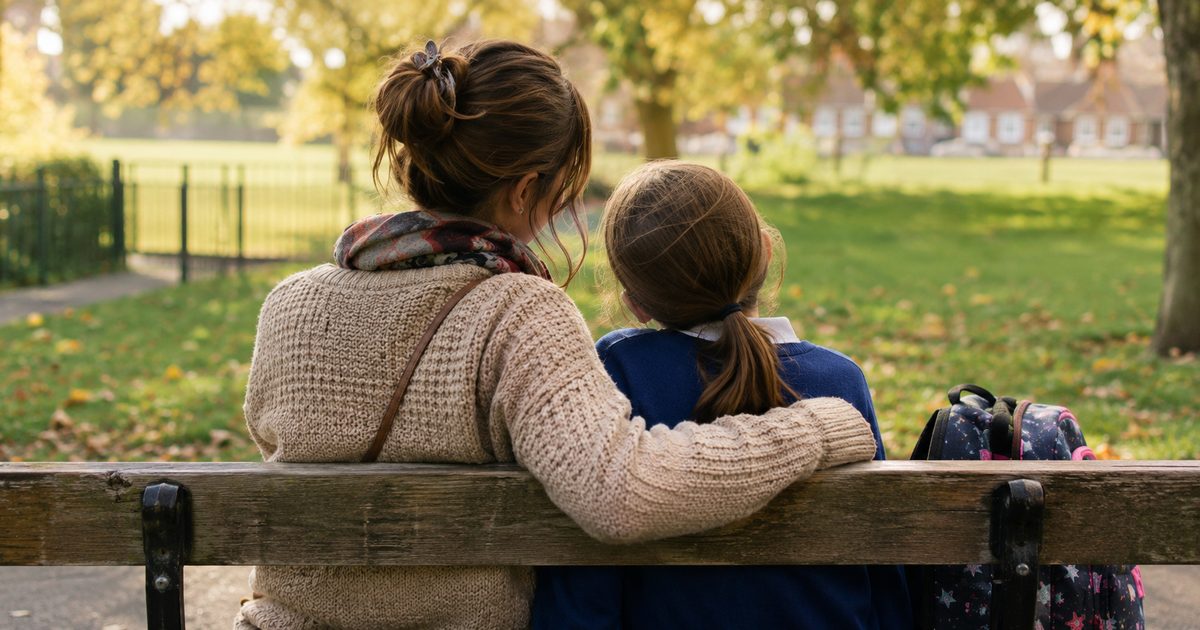
They get into the car quieter than usual, and you notice, and you don't push. Then later, in the bath, it comes out in a small voice: someone keeps calling them names, and nobody will let them join in at lunch. Something fierce rises up in you, and something helpless alongside it. You want to wrap them up and keep the world well away.
That ache is love doing exactly what it should. No parent can promise their child will never meet unkindness. But there is a lot we can do, early and without fuss, to help children meet it with their sense of who they are still standing, and to raise children who won't look away when it happens to somebody else.
What bullying actually is
Bullying is repeated, deliberate unkindness where one child has more power than another. It can be physical, verbal, social (leaving someone out, spreading stories) or, for older children, online. It sits among parents' deepest worries; in the 2025 Mott national poll, bullying was among the issues mothers were especially likely to rate as a big problem for children (Michigan Medicine).
It is never the fault of the child on the receiving end. Even so, some foundations help children cope better when it happens and make them more likely to speak up: a secure sense of their own worth, more than one circle of friends, words for what is going on, and the trust that telling a grown-up will actually help.
Those same foundations, with empathy added, also make children less likely to bully and more likely to be "upstanders", the ones who step in or go and fetch help. So the work happens on both sides at once.
Roots that hold when friendships get complicated
Kindness, courage and self-respect take shape long before secondary school. A five-year-old who has practised saying "stop, I don't like that" in a strong voice, and who knows they are loved for who they are, is better equipped at eleven when friendships get knottier, and at fifteen when the playground moves onto phones. These are also the beginnings of an adult who treats people fairly and expects the same back.
Kindness you can practise outdoors and at the table
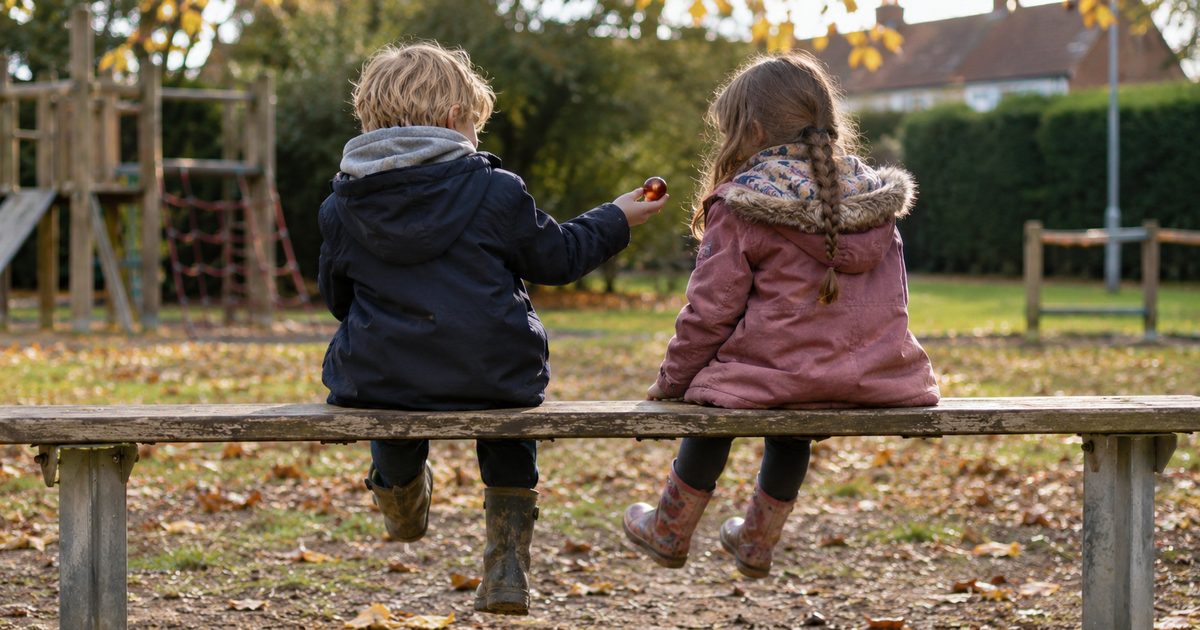
Get them outside working on something together. Den building, a treasure hunt, a nature scavenger list, carrying a picnic up a hill: all of these need children to cooperate, take turns and include each other, usually without anyone having to say so. Mixing with children from outside their usual class widens the circle of friends, too. For three to five year olds keep it simple, like filling a bucket together; older children often love organising a game for the little ones.
Give them something small to look after. A plant, a bird feeder, a bug hotel. Caring for living things teaches children to notice the needs of something smaller and quieter than themselves, and empathy grows with practice. Nature offers endless, gentle practice. With little ones you might wonder aloud, "how do you think the little bird feels?"; older children might research one creature and find out how to help it.
Practise the strong voice at home, when everyone is calm. Use toys, or each other, to role-play simple scenes: what to say if someone is unkind, how to walk away, who to tell. Work on a strong, calm voice and a confident body: stand tall, look up, clear words. Skills rehearsed on a quiet afternoon are much easier to find when someone is upset. Younger children can have teddy say "stop, I don't like that". With nine and ten year olds, talk through "what would you do if you saw it happen to someone else?"
And at dinner or bedtime, share one kind thing you saw or did that day. It keeps kindness in view, and it quietly makes a regular, easy space for a child to mention when something unkind happened as well. Ask the youngest "who was kind to you today?" and older ones "was there a moment today when someone needed a friend?"
- Outdoor teamworkBuild dens, follow a treasure hunt or carry a picnic up a hill, taking turns and including others.
- Something to look afterCare for a plant, bird feeder or bug hotel, noticing the needs of something small.
- A strong voiceRole-play when calm: stand tall, look up and say clearly, "stop, I don't like that".
- One kind thingAt dinner or bedtime, share one kind thing you saw or did that day.
What you'll need
- A bird feeder, plant or bug hotel
- Toys for strong-voice role-play
- An afternoon for den building outdoors
- Five minutes at dinner for a kind thing
Our tips
- Rehearse the strong voice on a calm afternoon, so it is easier to find on a hard day.
- Widen the circle with friends from outside their class, at the park or a club.
- Talk about kindness every day, so telling you about unkindness feels just as easy.
Words to try
- "Thank you for telling me. You did exactly the right thing."
- "That was not your fault. Nobody deserves to be treated like that."
- "Who could you stand next to at lunch tomorrow?"
- Try asking: "What makes a good friend, like a flower that keeps growing?"
When to ask for more help
If you're worried your child is being bullied, or they show signs like not wanting to go to school, losing belongings, unexplained injuries, changes in sleep or appetite, or seeming withdrawn, talk to their teacher calmly and early. If your child is being hurt or threatened, speak to the head teacher straight away. Every school must have an anti-bullying policy. The NSPCC and Anti-Bullying Alliance have clear guidance for parents.
Playbook: one week
For the fridge: one small step a day
- MonStart the daily kindness noticing at dinner 5 mins
- TueFill or make a bird feeder together 20 mins
- WedStrong-voice role-play with toys 10 mins
- ThuKindness noticing at bedtime 5 mins
- FriInvite a new friend to the park 1 hour
- SatTeam adventure: den building or treasure hunt 1-2 hours
- SunTalk: "Who could use a friend this week?" 10 mins
We will put each day on your family calendar, starting today, with the matching mission ready to open.
Questions parents ask
What should I say when my child tells me they are being bullied?
Start by thanking them for telling you and making clear it is not their fault. Stay calm and listen to the whole story, so they know telling a grown-up helps. Then speak to their teacher calmly and early, as every school must have an anti-bullying policy and is there to help put things right.
How can I teach my 6-year-old to stand up for themselves?
Practise at home when everyone is calm, because rehearsed skills are easier to find when upset. Use toys or role-play to try a strong, steady voice and confident body: stand tall, look up, say "stop, I don't like that". Talk through how to walk away and which grown-ups they can tell.
How do I raise a child who stands up for others who are being bullied?
Empathy grows with practice, so give your child plenty of chances to care for others and for living things, like filling a bird feeder or building a bug hotel. Team adventures outside build cooperation too. At home, talk through what they could do if they saw someone treated unkindly, including fetching a grown-up.
Feelings in this guide
Wundoria is a set of eight story worlds for children aged 3 to 10, where every story ends with missions to do outside together. Our guides are written to support everyday family life; they are not medical advice. If you are worried about your child, talk to your GP or health visitor.
Play world one free How Wundoria works