Your child is halfway up the climbing frame, or the tree, or the very top of the slide where they're not really meant to stand. Your heart is somewhere in your throat. "Be careful" is out of your mouth before you've even thought about it, and then again, and then once more for luck.
Almost every grown-up knows this feeling. We love them, and we can see every possible way it could go wrong. But children seem to be drawn to a little height, a little speed and a little wobble for a reason. Learning to handle small risks is one of the ways they grow, and it's one of the hardest things to watch.
What risky play looks like
At 3 to 5, risky play is mostly about height and balance. Climbing onto the arm of the sofa, jumping off the bottom step, walking along a kerb, spinning until they fall over. Rough-and-tumble with a sibling or a grown-up, all rolling and wrestling and giggling, is a big part of it too.
At 6 to 10, children want more. Higher branches, faster scooters, wobbly stepping stones, den building with real sticks, exploring a little further from you. They are testing where their edges are, and seeing what their bodies can do.
The pull towards risk isn't recklessness. It's a child working out, through their own body, how high is too high and how fast is too fast. Each time they judge it right, they learn to trust themselves a little more.
Stepping back without letting go
The heart of it is the difference between a risk and a hazard. A risk is something a child can see and choose: a branch that might be too high, a log that wobbles. A hazard is something they can't see or judge: a rotten branch, broken glass, a busy road. Our job is to clear the hazards, then let them meet the risks. Water is the exception to stepping back: near streams, ponds or the sea, stay within arm's reach of young children.
So check the space first, then step back. Stay close enough to help but far enough that they're doing it themselves. Try not to lift children onto things they can't yet climb. If they can get up on their own, they can usually get down.
Swap "be careful" for words that help them think. "Is that branch strong enough?" "Where are you going to put your foot next?" "How does it feel up there?" These teach them to notice, rather than to worry.
Expect the odd bump and scrape. They are part of learning, not a sign you've got it wrong. If your child is naturally cautious, that's fine too. They'll stretch at their own pace, and the page on bravery has gentle ways to encourage it. The full guide on building confidence in children goes deeper into small wins outdoors.
- Check the spaceLook for hidden hazards like rotten branches, glass or a nearby road, and deal with those first.
- Step backStay close enough to help but far enough that they are doing it themselves. Keep your hands still.
- Ask, don't warnSwap 'be careful' for 'Where will your foot go next?' so they learn to judge the risk themselves.
- No lifting upIf they can climb up on their own, they can usually get down. Let them reach each height by themselves.
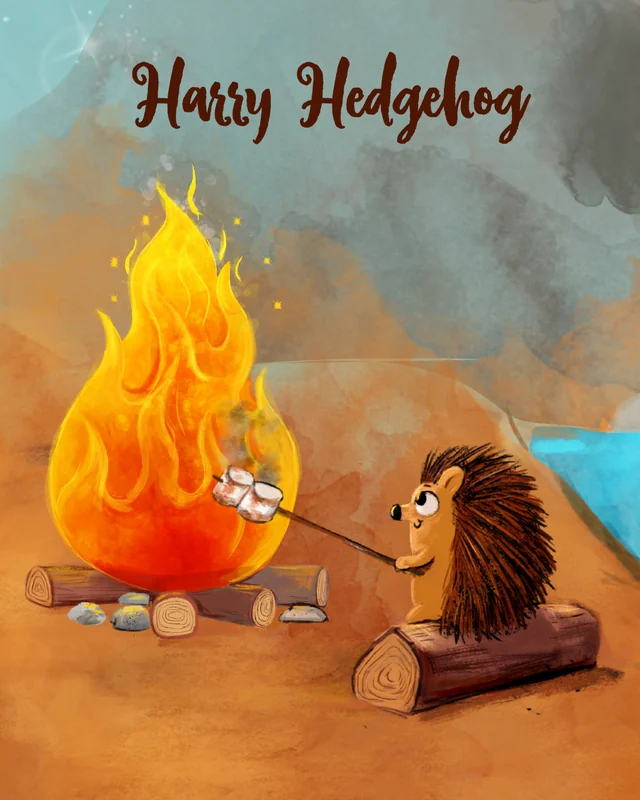
Harry Hedgehog, the cosy oneIn the stories, Harry Hedgehog shows children that strong things, like the ground and their own sturdy bones, can be friendly when treated with respect. Meet Harry Hedgehog
Trees, logs and wild edges
Nature offers the best kind of risky play, because it's never quite the same twice. A fallen log is a balance beam. A low tree is a climbing frame with surprises. A muddy bank is a slide. A stream asks to be crossed.
Find a regular wild spot and let your child explore it over many visits. The first time they might not leave the bottom branch. Weeks later they'll be two branches up, quietly proud. Older children often love den building, whittling with a grown-up close by, or a game of chase through the trees. Little ones may just want to jump off the same tree stump fifty times, which is exactly right.
If your child is the kind who doesn't like team games, risky play can be a wonderful way in, and the page on the child who isn't sporty explores that more.
What you'll need
- A regular wild spot with logs and trees
- A quick look round for glass or rotten branches
- Clothes that can get muddy and scuffed
- A calm breath and still hands
Our tips
- Clear the hazards first, then let them meet the risks.
- Swap "be careful" for "Where will your foot go next?"
- If they can climb up on their own, they can usually get down.
For the fridge: one small step a day
- MonWalk along a kerb or low wall
- TueCheck a wild spot for hidden hazards
- WedBalance across a fallen log
- ThuAsk "Is that branch strong enough?"
- FriRough and tumble with a stop word
- SatClimb a tree only as high as they can
- SunAsk: what was the trickiest bit today?
Words to try
- "Take your time. Your body knows what to do."
- "Where will your foot go next?"
- "I'm right here if you need me."
- "How did you work out how to get down?"
Try asking (afterwards): "What was the trickiest bit, and how did you do it?"
A week to try
For the fridge: one small step a day
- MonCheck a wild spot for hazards, then step back 15 mins
- TueSwap "be careful" for "where will your foot go next?" 0 extra mins
- WedOne step further on a log or branch 20 mins
- ThuRough and tumble with a stop word everyone respects 10 mins
- FriStream-crossing puzzle, grown-up within arm's reach 30 mins
- SatDen building in the woods 1-2 hours
- SunAsk: what was the trickiest bit, and how did you do it? 10 mins
We will put each day on your family calendar, starting today, with the matching mission ready to open.
Questions parents ask
Is it safe to let my child climb trees?
With sensible checks, yes. Look for healthy trees with strong, low branches, and clear the ground of anything sharp. Let your child climb only as high as they can get on their own, and stay nearby without hovering. Most children are surprisingly good at judging their limits when they're trusted to, and those small judgements are what risky play is for.
Why does my child love rough and tumble play?
Rough-and-tumble is a very natural kind of play. Through it, children learn about strength, gentleness, taking turns and reading other people's faces. It helps to agree a simple stop word that everyone respects, keep it on soft ground, and watch that everyone is still smiling. When one child stops enjoying it, it's time to stop.
How do I stop saying be careful all the time?
Notice when you say it, and try swapping it for a question that helps your child think, such as "Is that branch strong enough?" or "Where will you put your hands?" Clear real dangers beforehand so you can relax a little. Breathing out, staying close and keeping your hands still is often all a child needs from you.
Wundoria is a set of eight story worlds for children aged 3 to 10, where every story ends with missions to do outside together. Our guides are written to support everyday family life; they are not medical advice. If you are worried about your child, talk to your GP or health visitor.
Play world one free All of movement