You sit down on the floor to play, and within a minute you're running things. You suggest the tower goes higher, the teddy should be a doctor, the train goes on this track, not that one. Your child goes along with it for a while, then wanders off. A few minutes later you hear them in the next room, deep in a game of their own, talking to a wooden spoon.
It's such an easy thing to do, and it comes from love. We want to help, to teach, to make it better. But some of the richest play happens when a grown-up sits back, keeps quiet, and lets the child be the one in charge.
What child-led play looks like
At 3 to 5, play is the whole of a child's work. Left to it, they'll pour sand from cup to cup for half an hour, line up stones in careful rows, turn the sofa into a ship. It can look repetitive or pointless to an adult. It rarely is. Small children are testing how the world works, again and again, until they're satisfied.
At 6 to 10, child-led play becomes more complicated and more social. Long imaginary games with rules nobody else understands, dens with secret entrances, made-up sports, clubs with passwords. Children of this age often want grown-ups out of the way altogether, or only as a helper when asked.
Why stepping back matters
When children lead, they practise deciding, planning, negotiating and changing their minds. They get bored and find their way out of it. They hit problems and work round them. Structured activities have a place, but a week with no gaps leaves little room for any of this. Unstructured time, especially outdoors, gives children something rare: a space where nobody is telling them what to do next.
Following, not directing
The heart of it is a small shift: from leading to following. Sit nearby and watch before joining in. If you are invited, take the role you're given, even if it's "the dog" or "the one who waits". Ask rather than suggest: "What happens next?" Resist fixing the wonky tower or correcting the story. It's theirs.
Then leave room for nothing. A free afternoon with no plan can feel uncomfortable, and there may be a burst of "I'm bored" at first. That's often the doorway. The guide to boredom and playing alone explains why it's worth riding out, and creativity has more on giving imaginations room to grow.
Stay close enough to be a safe base. Child-led play doesn't mean ignoring them. It means being there, interested and unhurried, without steering.
- Watch firstSit nearby and watch for a while before joining in, so you see where the game is going.
- Follow their leadIf invited, take the role you're given, even the dog, and ask "What happens next?"
- Leave empty timeKeep some afternoons free of plans. A burst of "I'm bored" is often the doorway in.
- Be a safe baseStay close, interested and unhurried, ready to help when asked but not steering the game.
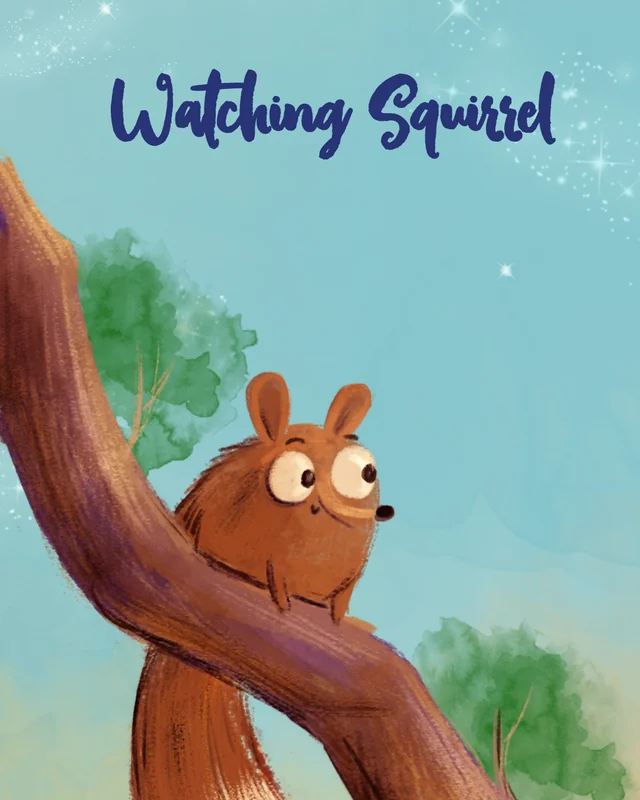
Watching Squirrel, the quiet observerIn the stories, Watching Squirrel simply sits and notices, showing that you can be part of everything and calm at the same time. Meet Watching Squirrel
Wild, open time
Outdoors is where child-led play really comes alive, because there's so much that isn't finished. Sticks, puddles, hollows, logs and long grass have no instructions. Try heading to the same patch of woodland, park or scrubby field each week and letting your child decide what happens there. Bring a flask and a blanket and settle in, rather than walking a route.
Some days they'll build a den. Some days they'll spend an hour poking a stream with a stick. Older children might want to roam a little further while you stay in sight. A bit of manageable risk, like climbing or balancing, is part of it too, and the playbook on risky play looks at how to step back safely.
What you'll need
- A flask and a blanket to settle in
- Boxes, sticks, sand or water
- A free afternoon with no plan
- The same patch of woods each week
Our tips
- Watch for a while before you join in.
- Take the role you're given, even the dog, and ask what happens next.
- A burst of "I'm bored" is often the doorway in.
For the fridge: one small step a day
- MonSit nearby and simply watch them play
- TueAsk "What happens next?" and follow
- WedSame patch of woods, they decide
- ThuLeave the wonky tower just as it is
- FriOffer boxes and sticks, not toys
- SatBlanket, flask and a whole free morning
- SunAsk: what was your favourite made-up bit?
Words to try
- "You decide. I'll follow."
- "What happens next in your game?"
- "I'll be just here if you need me."
- "Show me how it works."
Try asking (afterwards): "What was your favourite bit of what you made up today?"
A week to try
For the fridge: one small step a day
- MonSit nearby and watch before you join in 15 mins
- TueTake whatever role you're given 15 mins
- WedSame wild patch; the child decides what happens 1 hour
- ThuBring a flask and a blanket, and do nothing on purpose 30 mins
- FriLoose-parts den 45 mins
- SatA free afternoon with no plan 2-3 hours
- SunAsk: what was your favourite bit of what you made up? 10 mins
We will put each day on your family calendar, starting today, with the matching mission ready to open.
Questions parents ask
What is child-led play?
Child-led play is play where the child chooses what to do, how to do it and when to stop, while a grown-up stays nearby without directing. It might be building, pretending, exploring outside or simply messing about. The adult's role is to watch, follow if invited and keep things safe, rather than teach or organise. It gives children room to decide, imagine and solve problems.
How do I play with my child without taking over?
Watch for a while before you join in, then follow their lead. Take whatever role they give you, ask "what happens next?" rather than making suggestions, and resist fixing or improving things. Let the game be as odd or repetitive as they like. If you notice yourself steering, sit back for a minute. Your quiet attention is often what they want most.
My child can't play without me. What can I do?
Start by playing alongside them, then gradually do less. Sit nearby with a cup of tea, comment less, and let small silences happen. Offer open-ended things like boxes, sticks, sand or water rather than toys with one use. Short spells of independent play grow longer with practice. Time outside often helps, as nature gives children plenty to get absorbed in.
Wundoria is a set of eight story worlds for children aged 3 to 10, where every story ends with missions to do outside together. Our guides are written to support everyday family life; they are not medical advice. If you are worried about your child, talk to your GP or health visitor.
Play world one free All of finding their path