
The biscuit tin is open before you've finished saying "after dinner." A hand shoots up and the answer comes out before the question's done. A sibling's tower is knocked flat, and the face behind it looks just as surprised as everyone else.
It's easy to read this as naughtiness. But most of the time, a child who grabs, blurts or bumps isn't choosing to. The wanting simply arrives faster than the stopping. Self-control is the slow work of growing a gap between the two, and it takes years, for all of us.
Why stopping is so hard
At 3 to 5, the part of the brain that can pause and think is only just beginning to grow. A small child sees the slide and runs. Wants the toy and takes it. Feels cross and hits. Waiting, even for a minute, can feel impossible. Asking a four-year-old not to touch something interesting is asking a great deal.
At 6 to 10, things slowly get easier. Children start to wait their turn, hold a thought, and stop mid-action when asked. But it wobbles. Tiredness, hunger, excitement and a long day at school all wear it thin. A child who can wait beautifully on a Tuesday morning may lose it completely by Friday teatime.
Self-control is like a muscle that tires. It isn't a fixed part of a child's character. It grows with practice, rest and a lot of gentle repetition.
Practising the pause
The heart of it is practice, not punishment. Children learn to stop by stopping, in safe and playful ways, over and over again.
Games are wonderful for this. Musical statues, "Simon says," and "What's the time, Mr Wolf?" are all, quietly, self-control games. So is a game of freeze, where you call out "stop" and everyone becomes a tree. Each round, a child practises the tiny moment of holding back, and it's fun rather than a telling-off.
Rhythm helps too. Predictable routines mean fewer surprises, and fewer surprises mean fewer moments that overwhelm. Knowing what comes next is a kind of scaffolding. "First shoes, then the park" is much easier to wait through than a vague "in a minute."
When waiting is hard, give them something to do with the wait. Count the birds. Sing a song. Hold a stone. Describe the feeling out loud: "It's so hard to wait when you really want something." That isn't giving in. It's helping them notice the wanting without having to act on it. The playbook on calm has more ideas for the stillness underneath.
And keep expectations honest. A tired, hungry child at the end of the day has very little left to give. That's the moment to make things easier, not to test them.
- Play stopping gamesMusical statues, Simon says and freeze give lots of safe, fun practice at holding back.
- Keep a rhythmPredictable routines mean fewer surprises. 'First shoes, then the park' is easier to wait for.
- Fill the waitGive the waiting a job: count birds, sing a song, or hold a smooth stone in a pocket.
- Mind the tiredSelf-control wears thin when children are tired or hungry. Make those moments easier.
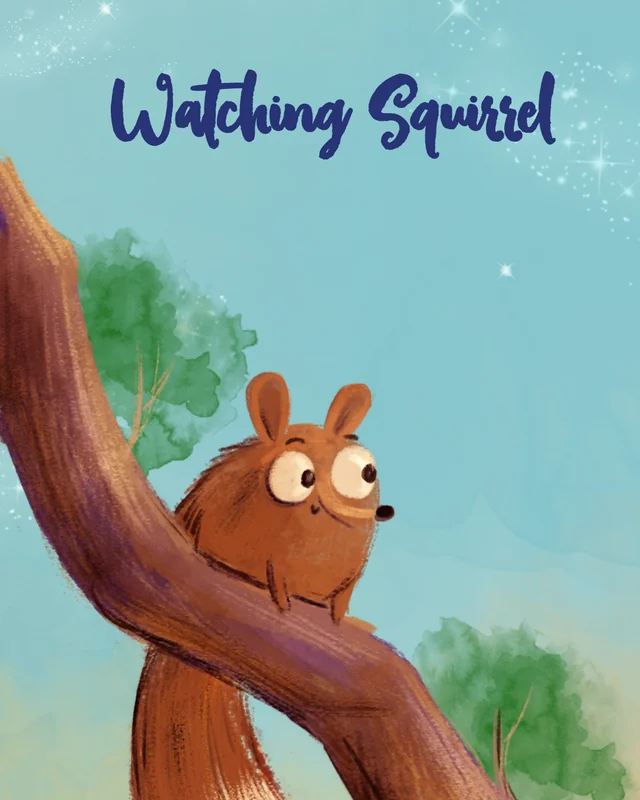
Watching Squirrel, the quiet observerIn the stories, Watching Squirrel simply sits and notices in the busiest world of all, showing there is a place inside the action for stillness. Meet Watching Squirrel
Waiting games in the wild
Nature is the great teacher of waiting. Birds will not come if you rush at them. Tadpoles take weeks. Blackberries ripen when they're ready, not when you want them.
Try sitting very still together near a bird feeder or a patch of seed on the path, and see who comes. Ten seconds of stillness is a big achievement for a three-year-old. Older children can stretch it to a few minutes, and the reward, a robin landing close by, is far better than any sticker.
Planting something is a longer kind of waiting. A bean in a jar on the windowsill, checked every morning, teaches that some good things simply can't be hurried. And walks have their own small practice: stopping at the kerb, waiting for the green man, walking slowly enough to spot a beetle. For the bigger picture, the guide on teaching patience to kids goes much deeper.
What you'll need
- A smooth stone for a pocket
- A bean, a jar and a sunny windowsill
- A few minutes near a bird feeder
- Music for a game of statues
Our tips
- Stopping games like statues and freeze are practice that feels like fun.
- Say "First shoes, then the park" instead of "in a minute".
- Tired and hungry? Make it easier rather than test them.
For the fridge: one small step a day
- MonPlay musical statues after tea
- TuePlant a bean in a jar to check daily
- WedSit still and see who comes to feed
- ThuUse "first this, then that" all day
- FriKeep the evening simple and easy
- SatPlay freeze: everyone becomes a tree
- SunAsk: what helped you wait this week?
Words to try
- "It's really hard to wait. You're doing it."
- "Let's count to five together, then go."
- "Hands in your pockets while we look."
- "Your body wanted to go. You stopped it. That's strong."
Try asking (afterwards): "What helped you wait just then?"
When to ask for more help
Talk to your child's teacher and your GP if impulsiveness is very strong in every setting, at home, at school and with friends, if it often puts your child or others in danger, or if it's getting in the way of learning and friendships well past the early school years.
A week to try
For the fridge: one small step a day
- MonFreeze like a tree: musical statues outside 15 mins
- TueSit still by the feeder until a bird comes 15 mins
- WedSay what comes next: first shoes, then the park 0 extra mins
- ThuPractise the pause: stop, name it, choose 10 mins
- FriA bean in a jar, checked each morning 10 mins
- SatSit like an owl for one minute 5 mins
- SunAsk: what helped you wait just then? 10 mins
We will put each day on your family calendar, starting today, with the matching mission ready to open.
Questions parents ask
How can I teach my child self-control?
Through play and repetition rather than punishment. Games like musical statues, Simon says and freeze give children lots of safe, fun practice at stopping. Predictable routines help, as does giving them something to do while they wait. Notice and describe the moments they manage it. Self-control grows slowly, so expect progress over months and years, not days.
Is it normal for my four-year-old to have no self-control?
Yes. At four, the parts of the brain that help with pausing and stopping are still very young. Grabbing, blurting and struggling to wait are all ordinary at this age. You can still set calm limits, but expect to repeat them many times. Plenty of sleep, food, time outdoors and playful practice will help it grow at its own pace.
Why does my child lose control when they're tired?
Self-control uses up energy, and tired children simply have less of it. By the end of a busy day, especially after school, the gap between wanting and stopping shrinks almost to nothing. This isn't your child being difficult on purpose. Keep evenings simple, lower your expectations a little, and save the tricky moments for when everyone is rested.
Wundoria is a set of eight story worlds for children aged 3 to 10, where every story ends with missions to do outside together. Our guides are written to support everyday family life; they are not medical advice. If you are worried about your child, talk to your GP or health visitor.
Play world one free All of inner strength